
Cheese Varenyky: A Tender Ukrainian Dumpling with Rich Tradition
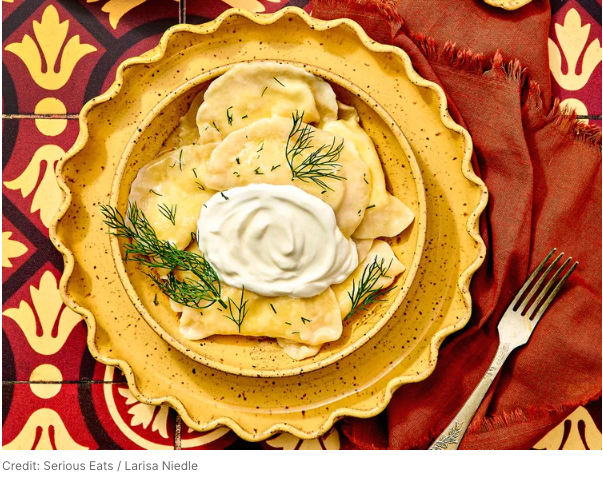
A Ukrainian dumpling that tastes like home
Varenyky are plump, tender dumplings that are beloved throughout Ukraine. Often tossed in butter and served with dollops of sour cream and plenty of fresh dill, they are widely associated with home cooking and shared tables. For many families, making varenyky is not a solitary task—it is communal, with people gathering to fill, fold, and shape dumplings together before sitting down to eat them.
The name “varenyky” comes from the verb “varyty,” meaning “to boil,” which reflects the most common cooking method. Traditionally, varenyky are crescent or half-moon shaped, though triangular dumplings are also prepared in many households today. While boiling is typical, dumplings may also be steamed or fried depending on where you are in Ukraine.
When varenyky are served (and why they matter)
Despite their popularity, varenyky are not necessarily considered everyday food. They are often reserved for special occasions and milestones, including weddings, the birth of a child, funerals, harvests, and seasonal festivals. They also appear in specific holiday contexts. During Maslyana, a festival welcoming spring, varenyky filled with syr—a fresh curd cheese similar to ricotta or cottage cheese—are traditionally eaten.
Varenyky also connect to Christmas Eve traditions. As part of Sviata Vecheria, a 12-course Ukrainian meal eaten on Christmas Eve, tiny dumplings filled with minced mushrooms may be served in a beet consommé. This dish is called vushka, meaning “little ear,” and the dumplings are notably smaller than standard varenyky.
In Ukrainian culture, varenyky can symbolize prosperity and are sometimes prepared and eaten with the intention of bringing health, fertility, and abundant harvests. They have also been associated with harvest time, when people believed eating them could bring good fortune and provide strength for the work.
Regional variety: one dumpling, many expressions
Recipes for varenyky vary significantly across Ukraine. Differences in fillings, doughs, and toppings are often driven by what is available regionally and seasonally, as well as local cooking traditions. In practice, this means there are many legitimate versions rather than a single “correct” one.
- In Zakarpattia (western Ukraine), dumplings may be filled with a local cheese called bryndza.
- In Lviv, varenyky made with a hearty spelt dough are popular.
- In Chernihiv (north), cabbage and mushroom fillings are common, and dumplings are often garnished with bacon crackling.
- In Polisia (a northern region bordering Belarus), fillings can include hemp seeds and kidney beans.
In some parts of western Ukraine, varenyky are called pyrohy, a name connected to the Polish word for dumplings, “pierogi.”
Fillings and toppings: savory mains and sweet desserts
Varenyky can be savory or sweet. Savory versions filled with vegetables, cheese, or meat are typically served as a main course, while fruit-filled dumplings are often reserved for dessert. Two common savory vegetarian fillings are potato and syr. Other popular savory ingredients include meat, mushrooms, and sauerkraut.
Toppings are not an afterthought. Savory varenyky are often served with fried salo or shkvarky (Ukrainian bacon), bacon fat, sautéed onions, and generous amounts of smetana (Ukrainian sour cream). Other toppings can include chopped herbs like dill and parsley, caramelized or fried onions, garlic, and bacon crackling. Sweet fillings—especially sour cherries and blueberries—may be served with sour cream, a drizzle of honey, or a sprinkle of sugar.
What makes a “good” varenyky
Across all the variations, a few qualities are consistently important: the dough should be tender, and the dumpling should have the right ratio of dough to filling so it feels properly stuffed. Plumpness depends on the filling, but the goal remains the same—well-filled dumplings with a wrapper that is soft rather than tough.
One key technique is using an enriched dough. Unlike many dumpling doughs that rely on flour and water (sometimes egg), varenyky dough is often enriched with ingredients such as sour cream, butter, milk, kefir, or oil. These fats help keep the dough tender. Some cooks debate whether egg is necessary, but egg yolk fat can help keep the dough soft while still allowing enough structure for rolling and shaping.
Cheese varenyky (syr-style): a practical, reliable method
The cheese filling is traditional and widely loved. The main challenge is moisture: a runny filling can make sealing difficult and can compromise the dumpling’s structure during cooking. A firmer, colder filling is easier to portion and helps you pack more filling into each wrapper.
- If using cottage cheese as an alternative to syr, strain it for at least 24 hours to remove moisture.
- Keep the filling cold and remove it from the refrigerator only when you are ready to shape the dumplings.
- Salt the cooking water well (similar to pasta water) for better overall flavor.
- Avoid overcooking: dumplings are done once they float, then cook 1 additional minute to ensure they are heated through.
- Dress cooked dumplings in butter to prevent sticking and drying out, then serve with sour cream and optional dill.
Ingredients (as written)
- All-purpose flour: 285g (10 ounces; about 2 1/4 cups), divided, plus more for dusting
- Diamond Crystal kosher salt: 1/2 teaspoon (for table salt, use half as much by volume)
- Unsalted butter: 56g (about 2 ounces; 4 tablespoons), softened and cubed
- Egg: 1 (plus egg yolk for filling)
- Sour cream (for dough) plus sour cream or crème fraîche for serving
- Water (for dough)
- For cooking water: 2 tablespoons (20g) Diamond Crystal kosher salt
- Additional butter for dressing cooked dumplings: 28g (about 1 ounce; 2 tablespoons)
- Chopped dill for serving (optional)
Step-by-step: filling, dough, shaping, and cooking
Prepare the filling: Line a fine-mesh strainer with 4 layers of cheesecloth and set it in a large mixing bowl. Place cottage cheese on the cheesecloth, fold over, and weigh it down (for example, with a 28-ounce can). Refrigerate until slightly crumbly and no moisture remains, at least 24 hours (up to 48). Press strained cottage cheese through a fine-mesh strainer. Combine 300g strained cottage cheese with egg yolk and salt; mix until smooth and refrigerate until chilled and firm (at least 30 minutes).
Make the dough: Whisk 210g flour with salt. Press butter into flour until crumbly. Make a well, then add egg, sour cream, and water. Mix until shaggy. Knead gently, gradually incorporating the remaining 75g flour until soft and smooth (about 5 minutes). Cover and rest at room temperature for about 20 minutes.
Shape: Roll dough into a roughly 19-inch circle, about 1/16-inch to 1/8-inch thick. Cut 25 rounds using a 3-inch cutter or glass. Rest rounds for 10 minutes, covered. Place about 1/2 tablespoon (11g) filling in each round, fold into a half-moon, and pinch firmly to seal. Keep shaped dumplings covered to prevent drying.
Cook: Bring 4 quarts (3.8 liters) water to a boil in a 6-quart pot. Salt with 2 tablespoons kosher salt. Cook dumplings in batches, stirring gently so they don’t stick. Once they float (about 2 minutes), cook 1 minute more. Transfer with a spider skimmer to a bowl with butter and toss to coat. Serve with cold sour cream and optional dill.
Make-ahead and storage notes
- Strained cottage cheese can be prepared up to 2 days in advance and refrigerated airtight.
- The cottage cheese filling can be made up to 24 hours in advance and refrigerated airtight.
- Shaped, uncooked varenyky can be frozen for up to 1 month (freeze on a lined baking sheet first, then transfer to a bag or container).
- The recipe can be doubled.
Whether you make them for a holiday table or a weekend cooking project, varenyky are often described as a labor of love—especially when made with friends or family. The process of shaping dumplings together can be as meaningful as the meal itself.