
Five Digestive-Friendly Herbs and Spices to Consider Beyond Ginger, According to Dietitians
Digestive discomfort is common—and food choices can play a supporting role
Digestive issues may not be the most pleasant topic, but they matter. Digestive diseases affect a large number of people, and everyday symptoms like bloating, nausea, abdominal discomfort, or post-meal heaviness can interfere with quality of life. While a single food or spice can’t solve every gut problem, what you eat and drink may still provide some relief or support—especially when used consistently and thoughtfully.
Ginger is one of the most well-known options for easing an upset stomach and other digestion-related discomforts. It shows up in teas, shots, meals, and even chewable supplements, and many people keep it on hand for when their stomach feels off. Still, ginger is not the only ingredient dietitians point to for gastrointestinal (GI) support. Several other herbs and spices have long histories of traditional use and, in some cases, research suggesting potential benefits for symptoms such as dyspepsia, gas, bloating, and irritable bowel syndrome (IBS).
1) Turmeric: a bile-moving spice that may be gentler for some people than ginger
Turmeric root is widely recognized for anti-inflammatory properties and has been used for a range of concerns, from joint pain to skin issues. Its uses also include GI disorders. Jenna Volpe, RDN, a gut health dietitian and herbalist, notes that turmeric’s anti-inflammatory properties may make it a useful spice for people with inflammatory bowel disease (IBD) or gut inflammation on a more functional level.
Volpe also points out one way turmeric may be preferable to ginger for certain individuals. Like ginger, turmeric is described as a “bile-moving” herb, which can aid the digestion of fats when consumed 15 to 20 minutes before meals. However, she notes turmeric may have a reduced likelihood of triggering heartburn or reflux symptoms for some people compared with ginger.
2) Fennel: a traditional post-meal staple with research interest for fullness, nausea, and IBS
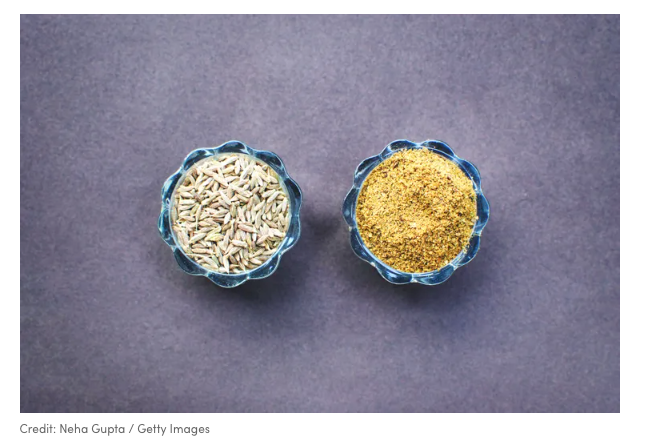
Fennel seed has a long history as a digestive aid. Volpe says fennel is renowned in Traditional Chinese Medicine and Ayurveda for digestive-supporting properties, and she adds that in many Southeast Asian countries, fennel is ingested after meals to aid digestion.
Beyond tradition, fennel has been studied for several digestive complaints. It has been shown to improve feelings of fullness, nausea, and dyspepsia. Volpe also notes evidence that fennel can significantly improve symptoms of IBS, referencing a study from 2016. There are also reports that fennel may help reduce gas and bloating, though more research is needed.
In the kitchen, fennel offers flexibility: the seeds are used as a spice, while the bulb and stalks are also edible and nutritious. The plant may have antioxidant and anti-inflammatory properties. It has also been associated with improved period cramps and polycystic ovary syndrome (PCOS), which may make it of particular interest for women’s health.
3) Cumin: a globally used spice linked to digestive enzyme activity
Cumin is a familiar ingredient in many cuisines, including Indian, Middle Eastern, and Mexican cooking. Yi Min Teo, RD, a dietitian specializing in digestive health, explains that there is some clinical evidence cumin can improve digestion and enhance digestive enzyme activity (a-amylase). This may support nutrient breakdown, ease post-meal discomfort, and help reduce gas and bloating when used regularly in food.
Teo points to a 2023 review that also described potential metabolic and cardiovascular benefits of cumin. At the same time, she emphasizes that clinical trials on efficacy and dosage are still varied and limited, which is an important reminder to keep expectations realistic and focus on cumin as a supportive food ingredient rather than a guaranteed fix.
4) Anise seed: a licorice-like spice studied for IBS symptom relief
IBS can be challenging to manage, and Volpe suggests that anise seed is worth knowing about for people who experience IBS symptoms. Anise is part of the parsley family and has a flavor similar to licorice. Many people have eaten anise seed without realizing it, as it can appear in baked goods such as cookies, breads, and biscuits.
Volpe highlights a trial suggesting promise for anise in IBS. In that trial, anise was reported to be superior to placebo and a pharmaceutical alternative for IBS symptom relief. Specifically, anise oil capsules taken before meals were shown to relieve IBS symptoms such as gas, bloating, and abdominal discomfort.
Anise also has a history of use in traditional Chinese medicine and is described as possessing anti-viral properties. Additionally, a compound in star anise is extracted and used in a prescription medicine for the flu.
5) Peppermint: a cooling counterpart to ginger with evidence in IBS studies
If ginger is often described as a warming spice, peppermint is considered a cooling one, Volpe notes. Peppermint may be especially relevant for people dealing with IBS. Volpe explains that peppermint leaf extract taken in delayed-release capsules has been shown to be beneficial for IBS sufferers in small clinical studies, and she notes this is supported by a 2019 meta-analysis. In that analysis, peppermint reduced IBS symptoms, particularly abdominal pain.
There is also some research suggesting peppermint oil may improve dyspepsia. While more research is still needed to fully understand peppermint’s GI effects, Volpe suggests it may be worth trying and notes it has helped her on her own IBS journey.
Practical ways to keep these spices in your routine
- Use them as everyday seasonings: Cumin and fennel seeds can be incorporated into regular cooking to support consistent intake through food.
- Think about timing when relevant: Turmeric is described as a bile-moving herb that may aid fat digestion when consumed 15 to 20 minutes before meals.
- Match the option to your main concern: Peppermint and anise are discussed in relation to IBS symptoms such as abdominal pain, gas, bloating, and discomfort, while fennel is noted for fullness, nausea, and dyspepsia.
- Keep expectations measured: Some areas have promising evidence, but dietitians also note that research can be limited or varied, especially regarding dosage and efficacy.
A supportive spice cabinet, not a one-step cure
Herbs and spices can be a practical, food-first way to support digestion, especially for people who already enjoy cooking and want gentle options to try. Ginger remains a popular choice, but dietitians also point to turmeric, fennel, cumin, anise, and peppermint as additional tools—each with its own traditional background and areas of research interest. If digestive symptoms are persistent or severe, it may be helpful to discuss them with a qualified healthcare professional.