
Healthy Eating on the Go: Practical Strategies for Restaurants, Travel, and Busy Days
Healthy eating away from home: why it can feel difficult
Healthy eating while you’re away from home can pose unique challenges. Busy schedules, limited food options, and social situations can all make it harder to stick with nutritious choices. Still, it is possible to maintain a nutritious diet while you’re on the go—at restaurants and social events, while traveling, and whenever you’re in a rush—especially when you have a plan and a few reliable strategies.
One helpful starting point is to think in terms of food groups and balance. Nutritious snacks and meals for on-the-go can be built by prioritizing dairy, protein sources, vegetables, fruits, and whole grains. When you focus on these categories, you’re more likely to cover key nutrients and feel satisfied between meals.
Use food groups to build a balanced meal
To eat healthy, you need to get a variety of nutrients from the five food groups. Each food group offers a different main nutritional benefit, so combining them helps you get a spectrum of nutrients that support good health.
A widely used meal planning approach is MyPlate, a nutritional guide and meal planning tool developed by the USDA based on the 2020–2025 Dietary Guidelines for Americans. Whether or not you follow MyPlate closely, the core idea is useful when you’re busy: aim for variety and balance rather than relying on one type of food.
- Prioritize a mix of dairy, protein sources, vegetables, fruits, and whole grains.
- When possible, build meals and snacks around more than one food group.
Why pairing food groups can help you stay full longer
To build a well-rounded plate, try pairing foods from at least two food groups to get a diversity of nutrients. A simple example is pairing a grain with a protein-, fat-, or fiber-rich food.
There’s also a practical reason this matters when you’re on the go: your body digests mixed meals that include protein, healthy fats, and fiber more slowly than grains alone. This can make you feel full for longer, which can help support a healthy weight and blood sugar management. In other words, balance isn’t only about nutrition—it can also make your meal more satisfying and easier to stick with when your day is hectic.
- Pair grains with protein, healthy fats, or fiber-rich foods.
- Choose mixed meals when you want longer-lasting fullness.
Don’t let a busy schedule lead to skipped meals
Skipping meals may cause you to overeat at your next meal or load up on unhealthy snacks. If you find this tends to happen to you, it may help to have preplanned food ready to grab and go when you’re in a rush.
If you find yourself constantly rushing out the door in the mornings without a plan for breakfast or even lunch, you’re not alone. Even if you’re not able to change your busy schedule, planning your meals can help you become more organized and intentional about having nutritious foods in the morning. It can also help you stop skipping meals unintentionally.
- Plan ahead so you’re less likely to skip meals.
- Keep ready-to-go options available for rushed mornings.
Dining out: enjoy the experience while staying aligned with your goals
Dining out has its benefits. The food itself can be very enjoyable, and dining with others is a great way to socialize with others. At the same time, maintaining healthy eating when you’re ordering restaurant food or dining out is key to supporting your overall lifestyle.
When eating out, the same foundation still applies: aim to include multiple food groups and look for balance. Thinking in terms of dairy, protein sources, vegetables, fruits, and whole grains can make restaurant decisions feel more straightforward. The goal isn’t perfection; it’s to keep your overall pattern supportive of your health while still enjoying meals with others.
Family events and social gatherings: balance in real life
Family and social gatherings, such as potlucks, bring people together to enjoy food and each other’s company. Even with more indulgent dishes, healthy eating is possible.
In these settings, it can help to return to basics: build your plate with variety and aim to include foods from at least two food groups. When you focus on balance, you can participate in the event without feeling like you have to choose between social connection and your nutrition goals.
Travel days: plan ahead and focus on portable options
Whether you’re catching a flight or preparing for a road trip, having a plan can save you the stress and struggle of hunting for nutritious snacks along the way. Travel often comes with unpredictable timing and limited choices, which is why planning becomes even more valuable.
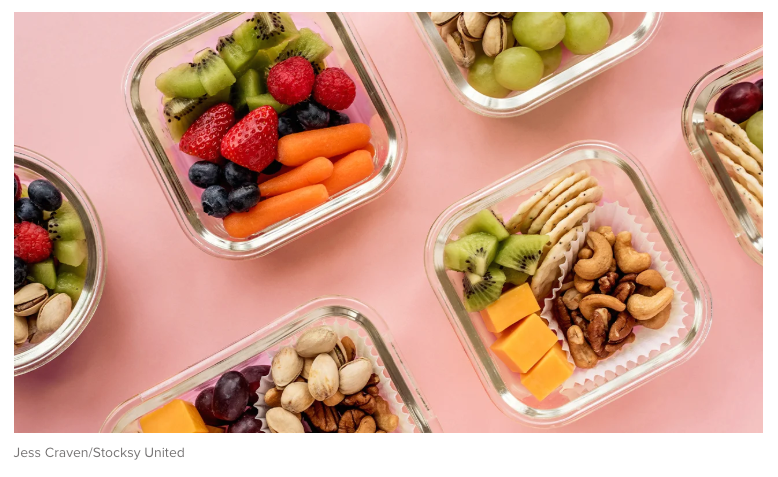
It’s not practical to travel with lots of fresh foods, so try to focus on nonperishable snacks. As with meals, you can maximize the nutrition you get from your snacks by focusing on dairy, protein sources, fruit, vegetables, and whole grains. Pairing items from more than one food group can also help keep you fuller for longer during long stretches between meals.
- Plan snacks and meals before travel to reduce stress.
- Choose nonperishable snacks when fresh foods aren’t practical.
- Aim for a mix of food groups to maximize nutrition.
Putting it all together: a simple on-the-go framework
Healthy eating when you’re on the go can be challenging, but with adequate planning, it is possible. Across busy mornings, restaurant meals, social gatherings, and travel, the same approach can help: prioritize nutrient-dense food groups and build meals and snacks with balance in mind.
If you remember just a few points, make them these: don’t rely on a single food group, try to pair foods for better staying power, and plan ahead so you’re less likely to skip meals. Over time, these small decisions can make it easier to maintain a nutritious diet wherever your day takes you.
- Prioritize dairy, protein sources, vegetables, fruits, and whole grains.
- Pair foods from at least two food groups when possible.
- Use planning to avoid skipped meals and last-minute choices.