
Holiday Bloat: 5 Practical Ways to Prevent That Overfull Feeling
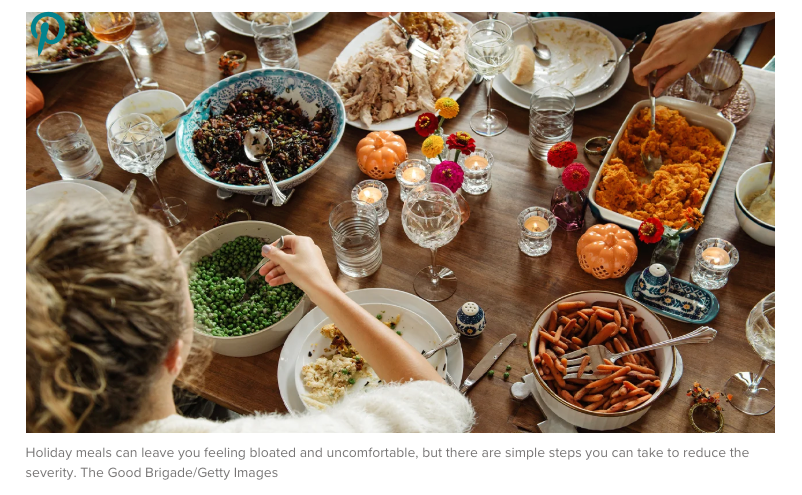
A full, heavy belly can be a sign of a memorable holiday meal—but it can also be the start of indigestion, nausea, and that sluggish, uncomfortable bloat many people associate with seasonal celebrations. Large holiday spreads can add up quickly. Research cited from the Calorie Control Council suggests a typical holiday dinner can contain over 3,000 calories, which is close to double the recommended calorie intake for adult females referenced in the 2020–2025 Dietary Guidelines for Americans.
There is also a basic physical limit to how much the stomach can comfortably handle. The average stomach holds about 2.5 ounces before it needs to expand, and it can hold up to 2 to 3 liters of food. When you push toward that capacity, discomfort can follow.
Below are five practical, food-focused strategies recommended by nutrition experts to help reduce intestinal discomfort during and after holiday meals—without taking the enjoyment out of the occasion.
1) Know your personal trigger foods (and ask about ingredients)
One of the most direct ways to prevent bloating is to avoid foods that you already know cause you discomfort. As a guest, this can be tricky because you may not know what ingredients are used in a dish. Still, planning ahead can help.
Nutrition expert Michael Hartman, PhD, emphasizes the value of awareness: whether your triggers include dairy, gluten, or another food, knowing your intolerances and sensitivities can help you avoid or limit them and reduce digestive issues like bloating. He suggests asking the host what they plan to serve and what ingredients are included—something most hosts appreciate, since they generally do not want guests to feel unwell.
If you are not sure what causes your symptoms, registered dietitian Erin Palinski-Wade recommends keeping a daily food record to identify patterns. Tracking what you eat, portions, timing, emotions (such as stress), and symptoms can reveal connections between certain foods or circumstances and bloating.
2) Eat consistently during the day instead of “saving up”
It can be tempting to eat very little before a big holiday meal. However, waiting too long between meals can backfire. Palinski-Wade notes that when you become ravenous, you are more likely to eat too fast and too much—both of which can increase bloating.
Instead, she recommends eating consistent meals and snacks throughout the day to support digestion. This approach can make it easier to arrive at the gathering feeling hungry—but not so hungry that you rush through the meal or overload your plate quickly.
She also highlights a few common patterns that can trigger bloating, including eating large amounts of cruciferous vegetables in one sitting, suddenly consuming more fiber than usual without building up gradually, and meals that are especially high in fats, sodium, and added sugar.
3) Make simple holiday swaps—or use a balanced-plate strategy
If you are hosting, or if you have some insight into what will be served, small changes can make holiday food feel a bit lighter while still festive. Hartman suggests that healthy holiday swaps can support a better relationship with food while also helping reduce discomfort.
Instead of dairy-heavy cheese balls and crackers, try hummus with pita and fresh vegetables.
Instead of buttery mashed potatoes, consider a sweet potato alternative.
Rather than a rice dish that is high in starch, choose legumes. Hartman notes legumes are rich in potassium, a mineral that helps flush out excess sodium that can contribute to bloating.
Palinski-Wade also suggests using milk in place of heavy cream to reduce fat in recipes and cutting back on large amounts of salt by leaning on flavorful spices such as cinnamon and nutmeg.
If swapping ingredients feels overwhelming, moderation can be a simpler and equally realistic tool. Palinski-Wade’s preferred strategy is to scan all offerings before serving yourself, then build a balanced plate:
1/3 produce
1/3 lean protein
1/3 favorite side dishes
This approach is designed to help you enjoy the meal without overdoing it—an important factor in reducing bloating.
4) Add fiber gradually and choose vegetables thoughtfully
Vegetables can be helpful for digestion, but the way you increase them matters. Hartman points to leafy, water-rich vegetables such as spinach, kale, bok choy, asparagus, and chard as options that are low in calories and packed with vitamins, minerals, and fiber—qualities he says work well to reduce bloating.
At the same time, Palinski-Wade cautions that rapidly increasing fiber can cause more bloating, not less. A gradual increase is typically easier on the digestive system and supports healthy bowel movements. She also notes that if you increase fiber without increasing water intake, you may end up with bloat and constipation.
Her practical guideline is to add an extra half cup of leafy greens every three days to slowly build intake. She also points out that cruciferous vegetables like broccoli can cause more gas, and may be better tolerated cooked rather than raw.
5) Moderate alcohol and space out your water intake
Alcohol is often part of holiday gatherings, but it can worsen a swollen, uncomfortable stomach after a heavy meal. Alcohol can cause dehydration, which may contribute to water retention as the body tries to hold onto fluid. Hartman describes alcohol as inflammatory and notes it can slow digestion and increase water retention, contributing to lethargy, swelling, gas, discomfort, and bloating.
Hydration can help, but how you drink matters. Palinski-Wade recommends visual reminders (like keeping a water bottle in sight), setting phone alarms, or using an app to track intake. She also advises spacing water out—rather than chugging it all at once—since drinking too much too quickly may increase bloating.
For alcohol moderation, Palinski-Wade suggests limiting intake to one glass per day for women and two glasses per day for men, and pairing each glass of alcohol with at least one glass of water.
If you want something festive without the added discomfort, she suggests mocktails made with sparkling water and 100% juice. One example she shares is a mix of 1 cup seltzer water with 1/4 cup tart cherry juice and a slice of lime. Hartman also recommends skipping mulled wine and spiked eggnog in favor of nonalcoholic cider or punch.
Holiday meals are meant to be enjoyed, and bloating does not have to be the price of admission. By identifying your triggers, eating consistently, making a few strategic choices, increasing fiber gradually, and balancing alcohol with steady hydration, you can reduce discomfort and feel more comfortable through the celebrations.