
How to Steam Spinach for Maximum Nutrition, According to Registered Dietitians
Why spinach is worth eating—raw or cooked
Spinach is one of the most popular leafy greens for good reason: it’s versatile, easy to use across meals, and widely recognized as a nutrient-dense choice. You can toss a handful into green smoothies, use it as a base for salads, or layer it into sandwiches and wraps. It also works well in cooked dishes—think soups, casseroles, pastas, and frittatas—making it a practical ingredient to keep on hand.
Even with all its benefits, some people hesitate to cook spinach because they’ve heard that heat can reduce nutrients. Registered dietitian Kaitlin Hippley, RDN, notes that cooking spinach may reduce some vitamin C and folate. That concern is real, but it’s only part of the story. Hippley also explains that cooking can make beta-carotene and other antioxidants more available, and the softened texture can make spinach easier to digest.
In other words, you don’t need to avoid cooked spinach out of fear that it becomes “less healthy.” Some nutrients may decrease, while others may become easier for your body to access. The key is choosing a cooking method that supports nutrient retention while delivering a texture you actually enjoy eating.
Cooking methods and nutrient retention
There are several common ways to cook spinach. Beyond sautéing, you can blanch, boil, microwave, or steam it. Each method can produce a different texture and can affect nutrients differently.
Among these options, microwaving and steaming are often highlighted as strong choices for nutrient retention because the cooking temperatures are relatively low. Steaming, in particular, is frequently recommended when you want a tender result without aggressively cooking the leaves.
Why steaming is a top choice
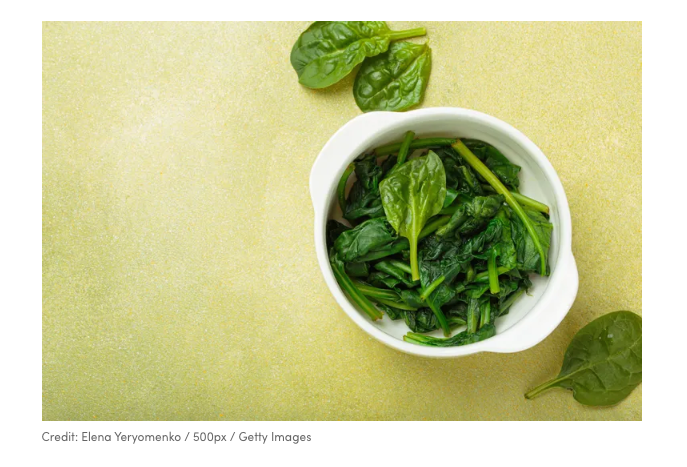
According to Hippley, steaming spinach is one of the best ways to lock in vitamins, minerals, and antioxidants while keeping a tender texture. She adds that spinach is rich in nutrients, including iron and fiber, and that eating steamed spinach is an easy, colorful, and powerful way to support overall health.
Steaming is also a helpful middle ground for people who don’t love raw spinach but still want to include it regularly. The leaves soften quickly, the volume reduces, and the flavor becomes milder—making it easier to add to a wide range of meals.
How to steam spinach (a simple approach)
Steaming doesn’t need to be complicated. The goal is to cook just until the leaves are wilted and tender, rather than letting them sit in heat for longer than necessary. Keeping the cook time brief helps preserve texture and supports nutrient retention.
Prepare the spinach: Use fresh spinach and get it ready to cook (for example, by portioning it). Spinach cooks down quickly, so starting with a generous amount is normal.
Steam gently: Steam the spinach only until it becomes tender and wilted.
Serve right away: Enjoy it as soon as it reaches the texture you like, or incorporate it into another dish.
Ideas for flavor—and for better nutrient absorption
Steamed spinach is mild, which makes it easy to pair with other ingredients. It can be served as a simple side dish, or mixed into other foods you already make. Because spinach can be used in so many ways, it’s easy to build it into meals without changing your routine.
Use it as a side: Steamed spinach can be a quick, tasty side dish that works with many main courses.
Fold it into everyday dishes: Add steamed spinach to soups, casseroles, pastas, or frittatas.
Pair it thoughtfully: Consider adding ingredients that boost flavor and support nutrient absorption, as recommended by dietitians.
Should you worry about nutrient loss?
Cooking spinach has been criticized because it can reduce certain nutrients, which can leave people unsure about the “best” preparation. But steaming spinach is considered one of the best ways to cook it because it can make certain nutrients more available. At the same time, some nutrients—such as vitamin C and folate—may decrease with cooking.
This balance is exactly why steaming stands out: it’s a gentle method that supports nutrient retention while still delivering the benefits of cooking, including improved availability of beta-carotene and other antioxidants, plus a softer texture that many people find easier to digest.
The bottom line
Whether you become a steamed-spinach regular or prefer eating it raw, the most important takeaway is to eat spinach in a form you enjoy and can stick with. As Hippley puts it, raw or cooked, spinach remains a nutrient-packed powerhouse worth adding to meals. Steaming is a simple, reliable option when you want a tender texture and a cooking method that supports overall nutrient value.