
Slow-Roasted Salmon for an Easy Yet Impressive Dinner
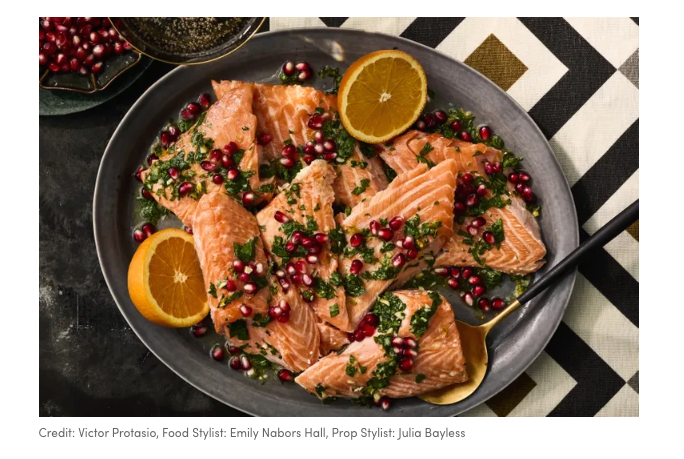
A low-and-slow salmon centerpiece
A side of salmon can feel like a special-occasion main without requiring complicated technique. This approach relies on slow roasting in the oven, which is designed to be both effortless and impressive. Cooking the fish at a low temperature helps deliver a soft, silky texture, and it’s also described as “almost impossible to overcook,” making it a reassuring option when you want consistent results.
The method is built around two ideas: gentle heat and frequent basting. The salmon roasts on a bed of sliced lemon and orange, while a generous amount of olive oil surrounds and coats the fish. As it cooks, you baste the salmon with the oil mixture every 15 minutes. This helps prevent the top from drying out and also infuses the fish with bright citrus flavor.
What makes this dish stand out
Low-temperature roasting: The oven is set to 250°F, which supports a tender, silky texture.
Citrus base: Thin slices of lemon and orange sit underneath the salmon, adding fragrance and flavor.
Olive oil basting: A substantial amount of oil is poured over and around the fish, then used for basting every 15 minutes to keep the surface from drying.
Gremolata-style topping: A herby-garlicky mixture finishes the salmon. While gremolata is traditionally made with parsley and lemon, this version includes mint, orange, and pomegranate arils for bursts of sweetness.
Ingredients (as provided)
1 (3-lb.) skinless salmon fillet (about 1 1/2 in. thick)
2 cloves garlic, finely chopped (about 2 tsp.)
Additional ingredients and measurements are included in the preparation steps below, including citrus, olive oil, salt, parsley, mint, pomegranate arils, orange zest, and orange juice.
Step-by-step method
1) Heat the oven. Preheat the oven to 250°F. This low temperature is a key part of achieving the soft, silky texture described for the finished salmon.
2) Prepare the citrus base. Thinly slice a lemon and 1 orange. Arrange the slices in the bottom of a rimmed baking sheet or baking dish. The ideal baking vessel is described as one that is just large enough to fit the salmon.
3) Season and add oil. Place the salmon on top of the citrus slices with the flesh side up. Sprinkle the salmon with 2 teaspoons salt. Pour 1/2 cup oil over and around the salmon, ensuring there is enough oil to baste during roasting.
4) Roast and baste. Bake the salmon, basting with the oil mixture every 15 minutes. Continue until the salmon just flakes with a fork and an instant-read thermometer inserted into the thickest part reads 130°F for medium. The timing given is 45 to 55 minutes, or you can cook to your desired degree of doneness.
5) Make the topping while the salmon cooks. Zest and juice the remaining orange. In a small bowl, stir together pomegranate arils, parsley, mint, garlic, 2 teaspoons orange zest, 3 tablespoons orange juice, and the remaining 1/4 teaspoon salt. Pour in the remaining 2 tablespoons oil and stir until combined. This mixture is the finishing topping for the salmon.
6) Rest, portion, and serve. Remove the salmon from the oven and let it rest for 5 minutes. Using a spoon and spatula, portion the salmon into large, irregular pieces and transfer to a platter. Spoon any juices and oil remaining in the baking sheet over the salmon, then top with the pomegranate-herb mixture.
Notes and practical tips
About the salmon skin: The salmon is specified as skinless. If removing the skin feels intimidating, the guidance provided is to ask the fishmonger at the seafood counter to do it.
Doneness check: The method uses two indicators: the salmon should just flake with a fork, and the thickest part should read 130°F on an instant-read thermometer for medium.
Basting schedule: Basting every 15 minutes is part of what keeps the top from drying out while also reinforcing the citrusy, olive-oil flavor.
Storing leftovers
Leftovers can be stored in an airtight container in the refrigerator for up to 2 days.