
Ultra-Processed Foods and Type 2 Diabetes Risk: What Recent Research Suggests
Ultra-processed foods are widespread in the food supply
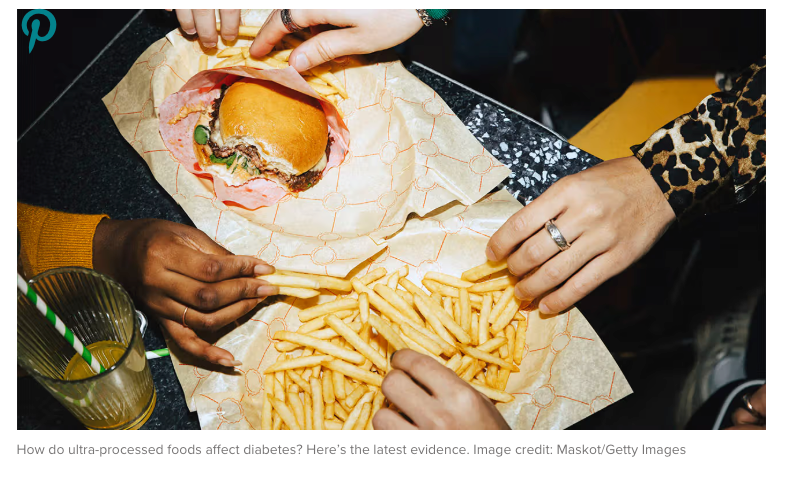
Ultra-processed foods have become a major part of modern eating patterns, especially in the United States. Research published in Nature Communications in 2023 estimated that around 70% of the food supply chain in the United States consists of ultra-processed foods. That scale alone helps explain why scientists, clinicians, and public health experts are paying close attention to how these products may affect long-term health outcomes, including type 2 diabetes.
At the policy level, definitions are still being refined. The Food and Drug Administration (FDA) and the U.S. Department of Agriculture (USDA) are working together to officially define ultra-processed foods. In the meantime, many experts and agencies commonly use the definition set out by NOVA, a widely used food classification system based on the degree and purpose of processing.
What counts as an ultra-processed food?
NOVA defines ultra-processed foods as those that contain “formulations of ingredients, mostly of exclusive industrial use, typically created by a series of industrial techniques and processes.” In practical terms, one way to think about ultra-processed foods is that they often contain ingredients that are generally not found in a kitchen cupboard. Examples of these types of ingredients include certain additives, emulsifiers, or stabilizers.
This does not mean that every packaged food is necessarily ultra-processed, or that processing itself is always harmful. However, the category of ultra-processed foods is often discussed because it can involve combinations of industrial ingredients and techniques designed to optimize shelf life, convenience, and palatability. Researchers have been studying the health risks of consuming ultra-processed foods, including how they may relate to blood sugar regulation and diabetes risk.
Evidence in young adults: ultra-processed foods and prediabetes
One area of growing interest is how diet patterns in adolescence and early adulthood may shape metabolic health. A study published in Nutrition & Metabolism in November 2025 looked at a potential association between ultra-processed foods and prediabetes in young adults.
Researchers from the Keck School of Medicine of USC studied a group of 85 young adults ages 17 to 22 over a 4-year period. They found that an increased intake of ultra-processed foods was linked to a higher risk of prediabetes. In a press release, Yiping Li, one of the study authors and a doctoral researcher in quantitative biomedical sciences at Dartmouth College, stated: “These findings indicate that ultra-processed food consumption increases the risk for pre-diabetes and type 2 diabetes among young adults—and that limiting consumption of those foods can help prevent disease.”
While one study cannot answer every question, this research adds to a broader body of work exploring whether ultra-processed foods are associated with early metabolic changes. It also underscores that diet quality matters even in younger age groups, when chronic conditions may not yet be apparent.
Sugary drinks: metabolic and cardiovascular complications
Ultra-processed foods are a broad category, and sugar-sweetened beverages are often discussed as an important part of it. A study published in Nature Medicine in January 2025 charted the metabolic and cardiovascular complications that may be associated with sugar-sweetened beverages, like soda.
The researchers found that around one in 10 new cases of type 2 diabetes and over 3% of cardiovascular disease cases are associated with sugary drinks. They also estimated that sugary drinks were linked to 80,278 deaths from type 2 diabetes and 257,962 deaths from cardiovascular disease.
From a practical nutrition perspective, the study’s findings align with common advice to reduce sugar-sweetened beverage intake. Maddie Gallivan, a registered dietitian who was not involved in the study, said that “there is really no benefit to drinking sugary drinks.” She advised that swapping sugary drinks for healthier options can make a difference to sugar intake while also offering additional benefits like probiotics and polyphenols.
For many people, beverages are an overlooked source of added sugar, partly because they are easy to consume quickly and may not feel as filling as solid foods. The research above focuses on associations and estimated contributions at the population level, but it highlights why beverage choices can be a meaningful part of a diabetes risk-reduction strategy.
Red and processed meat: associations with higher type 2 diabetes risk
Another set of findings in recent years has focused on meat intake. Research published in The Lancet Diabetes & Endocrinology in September 2024 found that eating red meat and processed meat can lead to a higher risk of developing type 2 diabetes.
In this research, people who ate around 50 grams (g) of processed meat each day—described as the equivalent of 2 slices of ham—were at a 15% higher risk of developing type 2 diabetes within the next 10 years. Eating 100 g of unprocessed red meat each day—described as the equivalent of a small steak—can increase the risk by 10%.
Why might this association exist? The research discusses risk patterns, and clinicians note that multiple factors could be involved. Silvana Obici, MD, Chief of the Division of Endocrinology at Stony Brook Medicine, who was not involved in the study, cautioned that statistical association does not necessarily imply causation. She also noted that cooking methods may matter: “Also, the cooking methods such as frying in fat/oil or charring meats at high temperature can generate byproducts well known to affect glucose metabolism (e.g., advanced glycation end products),” she added.
For individuals looking for alternatives, Jennifer Pallian, a registered dietitian and owner of Foodess who was not involved in the study, noted that there are various substitutes for red and processed meats that may help reduce your risk of type 2 diabetes. These substitutes include plant-based proteins and fish, especially salmon, mackerel, and sardines.
How the proportion of ultra-processed foods may relate to diabetes risk
Beyond individual products, some research looks at the overall share of ultra-processed foods in a person’s diet. A study published in The Lancet Regional Health: Europe in November 2024 examined the relationship between the degree of food processing and type 2 diabetes risk. This included which ultra-processed foods were the highest risk.
The researchers found that for every 10% increase in the amount of ultra-processed foods in your diet, your risk of type 2 diabetes increases by 17%. Importantly, the study also noted that this risk can be lowered by consuming fewer ultra-processed foods and replacing them with healthier options.
The study identified “the highest risk groups of ultra-processed foods,” though the specific list is not included in the extracted material provided here. Even without the full category breakdown, the main takeaway presented is that the overall proportion of ultra-processed foods appears to matter, and that substitution with healthier options may reduce risk.
Why “replacement” is a recurring theme in the research
Across these studies and expert comments, a consistent message is not only about reducing certain foods and drinks, but also about what replaces them. Nichola Ludlam-Raine, a specialist dietitian and the author of How Not to Eat Ultra-Processed, who was not involved in the study, noted that “replacing UPFs with whole, minimally processed foods can help with weight management, stabilize blood sugar levels, improve insulin sensitivity, and provide more nutrients and fiber, which are protective against type 2 diabetes.”
In other words, the benefit may come from both directions: fewer ultra-processed foods and more minimally processed foods. This approach can be more practical than trying to eliminate an entire category overnight, especially given how common ultra-processed items are in the food environment.
Ludlam-Raine also stated that small swaps are the way to go. The extracted content indicates she provided tips for swapping ultra-processed foods for healthier options, although the specific tips are not included in the text provided. Still, the principle is clear: incremental changes may be a realistic strategy for many households.
Practical, research-aligned swap ideas drawn from the provided evidence
Based strictly on the swaps and substitutions explicitly mentioned in the extracted material, the following options reflect approaches discussed by researchers and dietitians:
Swap sugary drinks for healthier options. A registered dietitian noted there is “really no benefit” to sugary drinks and suggested that choosing healthier beverages can reduce sugar intake while offering additional benefits such as probiotics and polyphenols.
Limit processed meat and consider alternatives. The research cited links daily processed meat intake (around 50 g) with a higher 10-year risk of type 2 diabetes. Substitutes mentioned include plant-based proteins and fish.
Choose fish options highlighted as substitutes. Fish suggestions specifically included salmon, mackerel, and sardines as alternatives that may help reduce risk when replacing red and processed meats.
Reduce the overall share of ultra-processed foods. One study reported higher risk with each 10% increase in ultra-processed foods in the diet, and also stated risk can be lowered by replacing them with healthier options.
Interpreting the findings with appropriate caution
The extracted research and expert commentary also include an important reminder about interpretation. As noted by an endocrinologist commenting on the meat-related findings, statistical association does not necessarily imply causation. This is a key point for readers: many nutrition studies identify links between dietary patterns and health outcomes, but those links can be influenced by multiple factors.
Even with that caveat, the studies summarized here converge on a practical direction: limiting ultra-processed foods and sugar-sweetened beverages, and being mindful about frequent consumption of processed and red meats, may be relevant for lowering risk of prediabetes and type 2 diabetes. The evidence presented also repeatedly emphasizes that replacement matters—what you eat and drink instead can shape the overall impact on blood sugar regulation and longer-term metabolic health.
A balanced takeaway
Ultra-processed foods are a significant part of the U.S. food supply, and research continues to explore how these products relate to type 2 diabetes risk. Recent studies cited in the extracted material report associations between higher intake of ultra-processed foods and higher risk of prediabetes in young adults, as well as population-level estimates linking sugar-sweetened beverages to new cases of type 2 diabetes and cardiovascular disease.
Additional research discussed links higher intake of processed meat and red meat with increased risk of developing type 2 diabetes over the next decade, while also acknowledging that association does not prove causation and that cooking methods may contribute through byproducts that can affect glucose metabolism.
For readers looking for actionable steps grounded in the provided evidence, the most consistent approach is to reduce ultra-processed foods where feasible and make gradual substitutions—particularly swapping sugary drinks for healthier options and replacing red and processed meats with plant-based proteins or fish such as salmon, mackerel, and sardines. Over time, small, repeatable changes may be easier to sustain than sweeping restrictions, especially in an environment where ultra-processed foods are widely available.