
Where to Find a Truly Classic New York City Pizza Slice
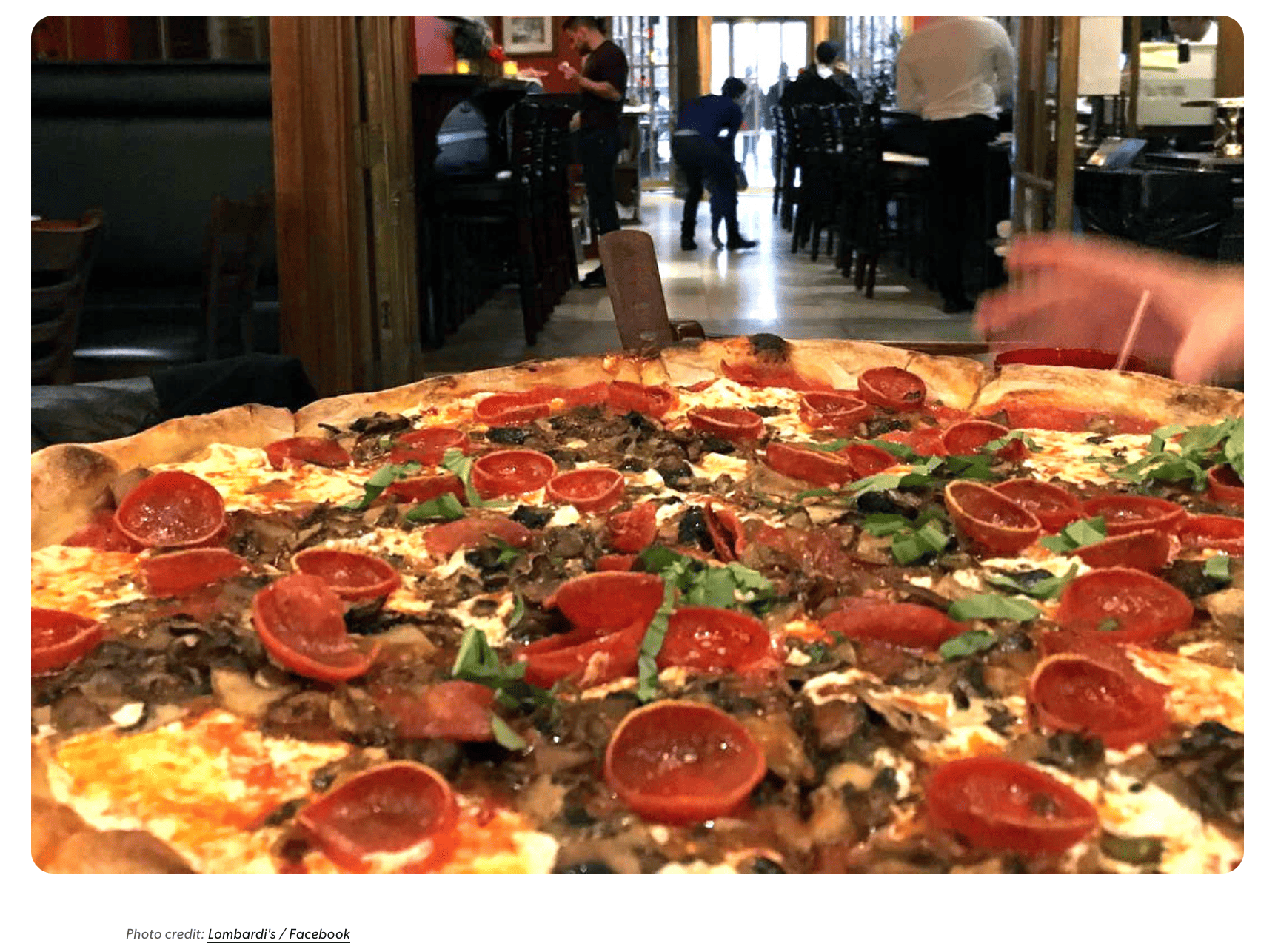
New York City pizza: famous for being simple—and for doing “simple” exceptionally well
New York City has long been able to stand on its own as a culinary destination, thanks to a roster of signature foods that are instantly recognizable: hot dogs, bagels, pastrami, and cheesecake, among others. Yet few items are as closely linked to the city’s identity as its pizza. It is the kind of food that fits into daily life: something you can grab on the go, snack on in the subway, or bring home and unbox on the stoop. That everyday accessibility is part of the appeal, but it can also make the landscape confusing for visitors and locals alike. With so many options across the city, the question isn’t whether you can find pizza—it’s whether you can find the slice that feels unmistakably, authentically New York.
Part of what makes the New York slice so enduring is that it is, on paper, surprisingly ordinary. The classic formula is straightforward: a large, thin base topped with tomato sauce and mozzarella cheese. No elaborate ingredient list is required. In fact, the point is often the opposite—restraint. The best examples prove that when the fundamentals are right, nothing else is necessary. The result is a style that can feel close to Neapolitan pizza in spirit, but with its own distinct character and local mythology.
What defines an “authentic” NYC slice?
Authenticity in New York pizza is not about novelty; it is about technique, heat, and consistency. Several factors are commonly associated with the city’s most classic pies. One is the dough itself. Connoisseurs frequently point to NYC tap water as a key influence on the dough’s distinctive qualities, producing a crust that is thin enough to fold in half—a hallmark of how many people eat a slice on the street.
Another defining element is the oven. Many of the city’s most revered institutions have relied on traditional coal-fired ovens running at extremely high temperatures—often described as 800 degrees. That kind of heat can create a particular texture and flavor profile, including a crisp exterior and a smoky edge that is difficult to replicate with lower-temperature equipment. Finally, there is the physical handling of the dough. In the most traditional shops, the dough is hand-stretched rather than rolled, a technique that helps preserve the structure and feel of the crust.
These details may sound technical, but they translate into a very specific eating experience: a slice that holds together when folded, a crust that is both tender and crisp, and a balance between sauce and cheese that feels effortless. When people talk about the “real” New York slice, they are often describing this combination of simplicity and craft.
Lombardi’s: the early cornerstone of New York pizza
Any discussion of classic New York pizza tends to begin with a name that has become part of the city’s culinary history: Lombardi’s. Often described as the first pizzeria in the United States, it remains in business today, operating out of a modest location in Little Italy. The pizzeria dates to 1905, founded by Neapolitan pizza chef Gennaro Lombardi. While the city has changed dramatically since then, the appeal of Lombardi’s is rooted in continuity and tradition.
One of the defining features here is the original coal-fired oven, which is credited with producing pizzas that carry an impeccably smoky character. The format is classic and familiar: an obligatory 16-inch pie cut into eight slices. Lombardi’s is frequently framed as a foundational institution—an early model that helped shape what New Yorkers came to expect from a pizza shop, and what outsiders came to associate with New York pizza as a whole.
Totonno’s: a legacy that traces back to Lombardi’s
The influence of Lombardi’s extends beyond its own dining room. Totonno’s in Coney Island is a notable example of how that early tradition spread across the city. It was founded in 1924 by Anthony Pero, a former Lombardi’s chef who struck out on his own. That connection is part of Totonno’s identity: it is not simply another old pizzeria, but one that carries a direct lineage from one of the city’s earliest pizza kitchens.
Totonno’s is also known for its ingredients and recognition. The tomatoes are sourced from Italy, reinforcing the shop’s ties to Italian roots. At the same time, the acclaim has come from within New York’s own food culture. Both the New York Times and Zagat have praised Totonno’s, with the pizzeria touted as the best pizza in NYC. Whether a diner arrives because of the history, the location in Coney Island, or the reputation, Totonno’s stands as a reminder that “authentic” can mean both tradition and enduring excellence.
John’s on Bleecker Street: coal-fired consistency and a classic dining room
John’s on Bleecker Street fits neatly into the recognizable template of an authentic New York pizzeria. Founded in 1929, it is another institution associated with a coal-fired oven and the high-volume rhythm of a busy city pizza shop—an oven that has been turning out hundreds of pizzas a day for decades.
Unlike many slice counters, John’s is known for not selling pizza by the slice, a detail that shapes the experience. The lines can be long, but the payoff is a setting that leans into the feel of a traditional Italian pizzeria, complete with wooden booths and Art Deco flourishes. The atmosphere is part of its appeal, and it has also become known for a formidable list of regular celebrity clientele. Still, the central draw remains the pizza itself: a classic pie produced in a classic way, in a room that feels built for lingering rather than rushing.
Patsy’s: an East Harlem landmark with a slice-by-slice legacy
Patsy’s, founded in 1933, is described as an East Harlem landmark that has managed to maintain a neighborhood restaurant atmosphere despite drawing a steady stream of entertainers, politicians, and New York Yankees. That balance—local feeling with citywide fame—captures something essential about New York pizza culture. The best-known shops often become destinations, but they also remain woven into the daily life of their neighborhoods.
Patsy’s holds a particular place in pizza history as the first authentic pizzeria to sell pizza by the slice. That innovation matters because it aligns with how New Yorkers often eat: quickly, casually, and on their own schedule. The model worked, and the shop’s reputation only grew. Among its most famous admirers was Frank Sinatra, who reportedly picked Patsy’s as his favorite place to grab a slice. In a city full of opinions, that kind of endorsement becomes part of the lore.
Di Fara: a later arrival that became a modern classic
Not every revered pizzeria in New York traces its roots to the earliest decades of the 20th century. Di Fara, opened by Dom De Marco in 1965 on Avenue J, is sometimes described as a relative newcomer compared with the city’s oldest institutions. Yet it has earned a place in the conversation about authenticity and excellence—proof that tradition can be sustained and reinterpreted over time.
Like many of the city’s most celebrated pizza spots, Di Fara can be easy to miss from the outside; it is the kind of place you might walk past without realizing what it represents. Its reputation has been reinforced by the attention of chefs and critics, including Anthony Bourdain, who named it a personal favorite. The pizza’s signature elements are described in vivid, specific terms: fresh basil, plenty of olive oil, and a three-cheese topping that includes mozzarella, Parmigiano-Reggiano, and fior di latte (a mozzarella made from cow’s milk). In a style defined by simplicity, these small choices—herbs, oil, cheese blend—can make a decisive difference.
Sal & Carmine: a neighborhood slice shop that keeps the focus tight
One recurring characteristic of the most “authentic” New York pizzerias is a narrow focus: pizza is not just the star of the menu—it is the only thing on it. Sal & Carmine on the Upper West Side is described as a neighborhood landmark that embodies this idea. The atmosphere includes a splash of theater behind the counter, but the mission remains straightforward: serve outstanding pies, slice after slice.
The description of the pizza itself emphasizes texture and seasoning. The slices are said to have a soft, tender crust, paired with a perfectly seasoned topping that lingers in the memory. In a city where pizza can be eaten quickly and forgotten just as fast, that lingering impression is a meaningful mark of quality.
Joe’s: no-nonsense slices with wide appeal
Joe’s has been recognized by New York Magazine as the “Best of New York,” and it has expanded to five locations across the city. The original shop opened in 1975 in Greenwich Village, and it remains a reference point for people seeking a straightforward, classic slice experience.
Joe’s offers choices that still sit within recognizable New York traditions. Diners can opt for a traditional Neapolitan-style eight-slice pie, or choose a Sicilian-style square pie for a different shape and texture. The overall vibe is described as unashamedly no-nonsense—an approach that, somewhat ironically, has helped attract an astonishing list of patrons from show business and the A-list. The appeal is not built on gimmicks; it is built on a reliable slice served with minimal fuss.
Best Pizza: a newer shop with a Brooklyn twist
While many of the city’s most celebrated pizzerias are defined by decades of history, New York’s pizza culture is not frozen in time. Best Pizza is an example of a newer venue that still draws heavily on the city’s established slice-joint traditions. It is known for superlative 20-inch pies cooked in a wood-fired oven, paired with what is described as a Brooklyn twist.
The inspiration is tied to traditional Brooklyn slice shops and to the owner’s Sicilian “nona,” connecting the pizzeria’s identity to both local New York habits and family heritage. At the same time, its founder, Frank Pinello, is a Culinary Institute of America graduate—a detail that signals how pizza has increasingly been treated as a craft worthy of serious culinary attention. Best Pizza opened in 2010, yet each slice is framed as an evocation of a rich local heritage, bridging old and new without abandoning the fundamentals that define the city’s style.
How to approach a New York pizza crawl
With so many iconic shops spread across different neighborhoods, the most practical way to explore New York pizza is to treat it like a series of small meals rather than one big event. Some places are built around whole pies, while others are synonymous with the slice-by-slice rhythm of city eating. Some are famous for coal-fired intensity, while others lean on a softer crust or a particular balance of cheese, basil, and oil.
What ties them together is a shared philosophy: the best New York pizza rarely needs to prove itself through excess. The classic slice is a study in proportion and execution. It is thin, often foldable, and built from a short list of ingredients that leave little room to hide mistakes. When done well, that simplicity becomes the point.
Iconic NYC pizzerias to prioritize
Lombardi’s (Little Italy): Founded in 1905 by Gennaro Lombardi; known for its original coal-fired oven and smoky 16-inch pies cut into eight slices.
Totonno’s (Coney Island): Opened in 1924 by former Lombardi’s chef Anthony Pero; uses tomatoes from Italy; praised by the New York Times and Zagat.
John’s on Bleecker Street: Founded in 1929; coal-fired oven; does not sell by the slice; classic Italian pizzeria setting with wooden booths and Art Deco details.
Patsy’s (East Harlem): Opened in 1933; neighborhood feel with famous visitors; first authentic pizzeria to sell pizza by the slice; associated with Frank Sinatra’s preference.
Di Fara (Avenue J): Opened in 1965 by Dom De Marco; praised by chefs and critics including Anthony Bourdain; known for fresh basil, olive oil, and a three-cheese topping (mozzarella, Parmigiano-Reggiano, fior di latte).
Sal & Carmine (Upper West Side): Pizza-only menu; known for soft, tender crust and well-seasoned toppings.
Joe’s (Greenwich Village and other locations): Original opened in 1975; recognized as “Best of New York” by New York Magazine; offers Neapolitan-style pies and Sicilian-style square pies; no-nonsense approach with broad appeal.
Best Pizza (Brooklyn): Opened in 2010; serves 20-inch pies cooked in a wood-fired oven; inspired by Brooklyn slice joints and the owner’s Sicilian “nona”; founded by CIA graduate Frank Pinello.
Why the backstory matters—until the slice arrives
Pizza is often described as America’s favorite dish, with NYC-style pizza positioned as the standard-bearer. The idea that a single city’s pizzerias could help inspire a national and international obsession is part of the broader American success story of immigrant influence, neighborhood institutions, and enduring food traditions. But in practice, the history fades into the background once a slice is in your hand. At that moment, what matters is the direct experience: the heat of the pie, the way the crust folds, the balance of sauce and mozzarella, and the sense that something so simple can still be so specific to a place.
For anyone trying to understand what “authentic” New York pizza means, these shops offer a practical roadmap. They represent different eras, different neighborhoods, and slightly different interpretations of the same essential idea. Together, they show why New York pizza remains more than a convenient meal: it is a daily ritual, a point of pride, and one of the city’s most enduring expressions of culinary identity.