
Cheeseburger Pie: A Family-Style Dinner That Tastes Like Your Favorite Burger
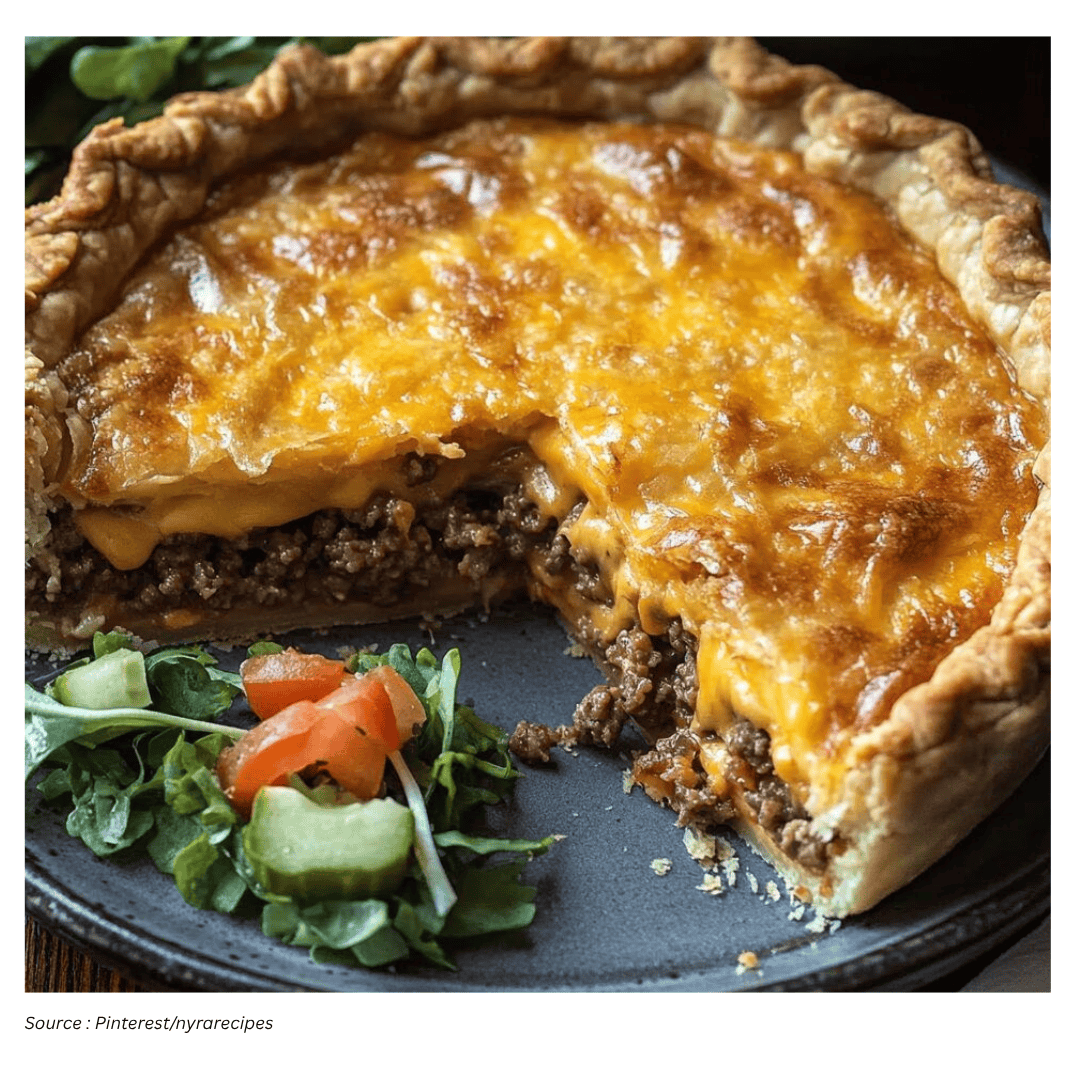
A cheeseburger, reimagined as a pie
There are dinners that feel instantly familiar, even if you didn’t grow up eating them. Cheeseburger pie is one of those dishes: it captures the core comforts of a classic burger—savory ground beef, melty cheese, and a satisfying “base” that stands in for the bun—then bakes it all into a sliceable, family-style meal.
At its heart, this recipe is a practical idea. Instead of shaping patties, toasting buns, and assembling individual burgers, you build a single pie that can be served in wedges. It’s the kind of dinner that tends to appeal to both kids and adults, and it’s easy to see why: the flavors are straightforward, the texture is hearty, and the presentation feels fun without being fussy.
It also happens to be customizable. If you have a favorite burger style—extra tangy, extra cheesy, topped with pickles or bacon—you can adapt the finished pie with toppings or small tweaks. That flexibility is part of what makes it a repeatable weeknight option rather than a one-off novelty.
Why this dish works
Cheeseburger pie is essentially a burger in casserole form, but with a structure that makes it easy to portion and serve. The meat layer delivers the savory foundation, the cheese mixture adds richness and a cohesive “set,” and the crust provides contrast and crunch around the edges.
One helpful way to think about it is in burger terms:
- The filling plays the role of the seasoned patty.
- The sauce element functions like the ketchup component in a burger build.
- The crust becomes the bun—supporting everything and making it easy to pick up as a slice.
Because it’s baked in a pie plate, it can be served as-is for a complete meal. Or, if you like a more “burger joint” feel, you can add classic toppings after baking—shredded lettuce, tomatoes, pickles, bacon, or a drizzle of burger sauce—to bring the experience even closer to a fully dressed cheeseburger.
Homemade crust, store-bought shortcuts, and what to expect
The recipe includes a homemade pie dough method, but it’s also the kind of dish that can accommodate shortcuts. Some home cooks use a store-bought crust and still end up with a dinner they’re happy to put on repeat. The main goal is a crust that bakes up golden and sturdy enough to hold the filling.
If you do make the dough from scratch, the process is straightforward: combine dry ingredients, cut in cold butter until the mixture resembles coarse meal, then add egg yolk and pulse just until the dough comes together. After that, chilling is key. Resting the dough in the fridge for about an hour makes it easier to roll and helps maintain a better texture once baked.
Once rolled, the dough is pressed into a 9-inch pie plate. Trim the overhang to about 1 1/2 inches and crimp the edges. Then it goes back into the refrigerator while you prepare the filling. That short chill can be useful for keeping the crust from softening too quickly before it hits the oven.
Step-by-step overview: how the pie comes together
This is a layered recipe: crust first, then a beef mixture, then a cheesy egg-and-milk mixture that bakes into a cohesive topping. Below is the process as outlined in the instructions, presented in a clear sequence so you can visualize the workflow before you start.
- 1) Make the dough: Pulse the dry ingredients, add butter and pulse until it becomes coarse meal, then add egg yolk and pulse until it just comes together.
- 2) Chill the dough: Turn it onto a floured surface, form into a ball, wrap, and refrigerate for 1 hour. (Some cooks like making extra dough and forming it into two balls for later.)
- 3) Roll and shape: Roll out the dough, press it into the bottom and sides of a 9-inch pie plate, trim overhang to about 1 1/2 inches, crimp the edges, and refrigerate again while you make the filling.
- 4) Brown the beef: Cook the ground beef in a skillet, then stir in the remaining filling ingredients.
- 5) Fill the crust: Pour the beef mixture into the pie plate and spread into an even layer.
- 6) Mix the topping: Beat together milk and egg, then stir in Worcestershire sauce, salt, dry mustard, and cheese.
- 7) Top the pie: Spread the cheese mixture evenly over the meat layer.
- 8) Bake: Bake at 425°F for about 30 minutes, or until done.
The result is a pie that slices cleanly once it has had a short rest, with a savory interior and a browned, set top.
Keeping the bottom crust from getting soggy
Any pie with a savory filling raises the same concern: will the bottom crust stay crisp? This recipe bakes long enough that it “shouldn’t be a problem,” but there are two practical techniques that can improve your odds of a firm, well-baked base.
- Brush the bottom crust with egg wash: This creates a thin barrier between the liquid filling and the crust.
- Bake on a baking sheet: Placing the pie plate on a baking sheet helps conduct additional heat, encouraging the bottom to bake more thoroughly.
These are simple steps, but they can make a noticeable difference, especially if your filling is on the saucier side or if you’re using a crust that tends to soften quickly.
Customizations: turning the pie into “your” burger
One of the most appealing parts of cheeseburger pie is how easily it can reflect your household’s preferences. Some people keep it classic; others treat it like a blank canvas for burger-inspired add-ons.
After baking, you can finish slices with familiar toppings:
- Shredded lettuce
- Tomatoes
- Pickles
- Bacon (including smoked bacon)
- A drizzle of burger sauce
You can also make small changes during cooking. One cook noted that their family loves onions, so they diced a small onion into the ground beef mixture and also layered fully caramelized sweet onions between the beef and the cheese. The key detail in that approach is moisture: onions should be fully caramelized before layering, because excess water can affect the consistency of the pie.
Other home-kitchen adjustments mentioned include using what’s on hand—such as a store-bought crust—or swapping in different pantry items for the sauce element. The theme is the same: the structure of the dish is forgiving, and it can still work even when you’re improvising with available ingredients.
Make-ahead and freezing guidance
This recipe fits well into meal prep routines because parts of it can be made in advance. The filling can be prepared ahead and stored in the refrigerator for up to two days. The pie crust can also be made ahead of time, which is especially helpful if you prefer homemade dough but don’t want to do all the steps on a busy evening.
Freezing is also an option. The pie can be frozen for up to a month in advance. When you bake it from frozen, plan for additional time—about 20 to 25 minutes longer. It’s also recommended to cover the pie so the top doesn’t brown too quickly while the center heats through.
These time frames make the dish useful for anyone who likes to stock the freezer with ready-to-bake dinners, or who wants to double a batch when ground beef is on sale.
Cooling and slicing: don’t skip the rest
Once the pie comes out of the oven, it can be tempting to cut into it immediately. But a short cooling period makes serving much easier. Let the pie rest for about 15 to 20 minutes before slicing. That window helps the filling set, which means cleaner wedges and less spillover onto the plate.
If you’re planning to add fresh toppings like lettuce or tomatoes, this resting time also helps prevent those ingredients from wilting on contact with a too-hot surface.
Storage and reheating
Cheeseburger pie stores well, which is part of why it can become a regular in the dinner rotation. Leftovers can be kept in an airtight container in the refrigerator for up to five days, or frozen for up to three months.
For reheating, use the oven rather than the microwave for the best texture. Preheat the oven to 350°F, place the pie on a baking sheet, cover with foil, and bake for about 20 minutes or until the filling is bubbling. The foil helps prevent over-browning while the center warms through.
Serving ideas: sides and the “burger night” feel
This savory pie can stand on its own, but it also pairs well with sides if you want to round out the meal. Because the flavor profile is rooted in familiar burger ingredients, you can take your cues from typical burger sides—something crisp, something fresh, or something that balances the richness of the meat and cheese.
If you’re serving a group, consider setting out toppings in small bowls so everyone can customize their slice. That approach keeps the pie itself simple while still offering variety at the table.
Ingredient notes from the kitchen
While the full ingredient list is typically provided in a recipe card, a few practical details came up in discussion that can help avoid common missteps. For the crust, cold butter is recommended, and cold tap water is fine—what you want to avoid is hot water, which can make the dough harder to handle.
For cooks who prefer shortcuts, using a store-bought crust is a workable option. Others have improvised with different sauce elements or dairy components based on what was available, reinforcing that the recipe’s basic method can accommodate some flexibility without losing its overall character.
A repeatable dinner with room for creativity
Cheeseburger pie is the kind of recipe that often earns a spot in the “monthly favorites” category because it checks so many boxes: it’s comforting, it’s straightforward to assemble, and it’s easy to adapt. You can keep it classic and let the beef-and-cheese combination do the work, or you can lean into the burger theme with toppings like pickles, tomatoes, lettuce, bacon, or sauce added after baking.
Whether you make the crust from scratch or rely on a store-bought version, the method remains approachable: brown the beef, layer it into the crust, add the cheesy egg-and-milk mixture, and bake until set and golden. Cool briefly, slice, and serve. It’s familiar food presented in a format that feels just different enough to make dinner interesting—without making it complicated.