
Beef Biryani: A Layered Indian-Inspired Rice Dish With Tender Beef, Spices and Fried Onions
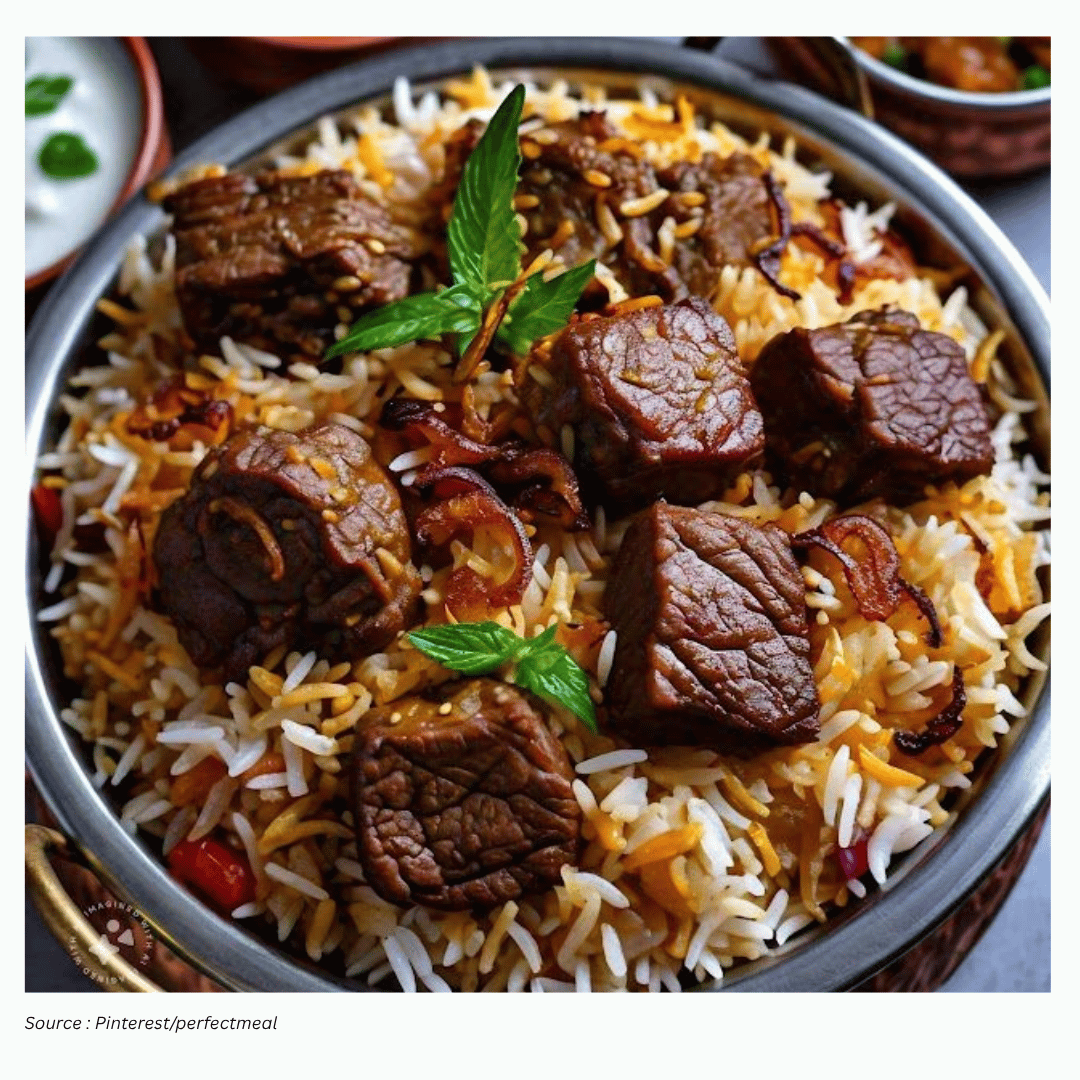
Beef biryani is the kind of dish that earns its reputation the moment it hits the table: aromatic, deeply seasoned, and built in layers that deliver a little bit of everything in each spoonful. At its core, biryani is a rice dish, but it’s also a method—one that combines spices, fried onions, and a protein into a single, cohesive meal. While many versions lean on chicken as the centerpiece, beef makes a compelling alternative, especially when it’s cooked until tender and then finished with rice in the oven.
This approach creates what biryani is known for: an “explosion of flavors” that feels celebratory without being complicated for the home cook. The process is structured—make a sauce, caramelize onions, brown the beef, simmer everything together, partially cook the rice, then bake the layers until the dish is unified. The result is a hearty meal that can stand on its own, yet also pairs well with classic sides if you want to round out the plate.
What makes beef biryani distinctive
Biryani is a layered Indian dish usually made with rice, spices, fried onions, and often chicken. It can also be prepared with other proteins, including lamb or fish. In this version, beef takes the lead. Because beef benefits from longer cooking, the method includes a simmering stage that gives the meat time to soften and absorb the sauce before it ever meets the rice.
The dish is aromatic and unique, with a balance of fluffy rice and richly flavored beef. Fried onions—caramelized until deeply golden—add sweetness and texture, while spices bring warmth. Notably, this beef biryani is described as not spicy in the sense of heat. It has a gentle warmth from the spice blend, but it is not meant to make you sweat.
Flavor inspiration and why biryani fits the “flavor bomb” category
For many cooks, Indian-inspired dishes are a go-to when the goal is big flavor. Think of classics such as chicken tikka masala, beef madras, chicken bhuna, or butter chicken—recipes that use spices and slow-simmered sauces to build depth. Biryani belongs in that same conversation, but it does so with a different structure: instead of serving sauce over rice, it layers components so the flavors mingle as the dish bakes.
That layering is key. You’re not just seasoning beef and serving it alongside rice; you’re creating a combined dish where rice finishes cooking in the presence of the beef mixture and the caramelized onions. This is what gives biryani its signature character and why it can feel special enough for a gathering, yet still practical for a weeknight if you plan your steps.
Core components: sauce, onions, beef, rice, and spices
This preparation revolves around a few essential elements:
- A blended sauce, made by combining ingredients in a food processor and setting it aside until needed.
- Caramelized onions, cooked in butter until golden and sweet, with raisins added after caramelization.
- Beef, browned in butter for added flavor before being simmered in the sauce.
- Spices, added to the sauce to create warmth and complexity.
- Yogurt and beef broth, stirred into the sauce along with some additional broth to create a simmering base.
- Rice, partially cooked briefly in broth, drained, then layered over the beef mixture to finish in the oven.
Each component is prepared with a specific purpose. Browning the beef adds depth. Simmering it in sauce tenderizes it and concentrates flavor. Partially cooking the rice ensures it finishes perfectly in the oven without turning mushy. And topping everything with caramelized onions provides a final layer of sweetness and aroma that ties the dish together.
Step-by-step method (high-level)
While the full ingredient list and detailed instructions are typically organized in a recipe card format, the overall workflow can be summarized clearly. The dish comes together in stages, and each stage builds toward the final bake.
- Blend the sauce: Combine the sauce ingredients in a food processor. Once smooth, set it aside.
- Caramelize the onions: Heat butter over medium heat in a Dutch oven. Add onions and cook until caramelized. After they reach that deep golden stage, add the raisins.
- Brown the beef: Add the remaining butter over medium-high heat and brown the beef. Remove the beef once browned.
- Simmer the sauce: Add the prepared sauce to the pot and bring it to a simmer.
- Season and enrich: Add spices to the sauce, then add yogurt, some beef broth, and return the beef to the pot.
- Cook low and slow: Simmer for about an hour to tenderize the beef and develop flavor.
- Par-cook the rice: While the beef simmers, cook the rice in broth for about 5 minutes. The rice will still be raw in the center at this point. Drain the liquid.
- Layer and top: Add the drained rice on top of the beef mixture, then top with the caramelized onions.
- Bake: Bake at 350°F for 30 minutes.
- Finish and serve: Once baked, mix everything together and serve.
This structure is especially useful for home cooks because it breaks biryani into manageable tasks. You’re essentially building flavor in the pot, then letting the oven do the final work of marrying the rice and beef together.
Why the rice is cooked briefly first
A defining technique here is the short, partial cook for the rice before baking. The rice is cooked in broth for about 5 minutes—long enough to begin softening, but not long enough to fully cook. It is then drained, layered over the beef mixture, and finished in the oven.
If you use the traditional boiling method—cooking rice like pasta—timing matters. The guidance is to keep that boil to about 4 to 5 minutes and drain on time. The reason is simple: the rice will continue cooking as the biryani bakes. Overcooking during the boiling stage can lead to rice that becomes too soft by the time it comes out of the oven.
Texture and heat level: what to expect
This beef biryani aims for tenderness and fragrance rather than intense heat. The beef is described as “melt in your mouth,” which is supported by the hour-long simmer in sauce, yogurt, and broth. The rice is intended to be fluffy, not heavy, thanks to the par-cook-and-bake method.
In terms of spice level, the dish is characterized as not spicy. That doesn’t mean it’s bland; it means the spices provide warmth and aroma without overwhelming heat. For many diners, that makes it a comfortable crowd-pleaser—flavorful enough to satisfy spice lovers, but approachable for those who prefer milder dishes.
Serving ideas: keep it simple or make it a spread
Beef biryani is filling enough to serve as a complete meal on its own. Still, it also works beautifully as the centerpiece of a larger table. If you want to add sides, a few options are especially compatible with the dish’s richness and aroma.
- Homemade naan: A natural pairing for scooping and soaking up any sauce clinging to the beef and rice.
- Onion raita: A cooling side that complements the dish’s warmth.
- Kachumber salad: A fresh, crisp contrast that can lighten the overall meal.
Whether you serve it alone or with sides, biryani tends to be at its best when brought to the table hot, mixed well after baking so the onions and rice distribute evenly, and then served immediately.
Storage and make-ahead notes
This dish is practical beyond the first meal. Leftovers store well, making it a good option for anyone who likes to cook once and eat multiple times.
- Refrigerator: Store leftovers in an air-tight container for 2 to 3 days.
- Freezer: Freeze for up to 3 months.
Because biryani is already a combined dish of protein and rice, it reheats as a complete meal. Keeping it sealed helps maintain moisture and preserve the aroma that makes biryani so appealing.
Equipment that supports the method
The equipment you use can influence the final result. This method specifically calls for cooking onions and beef in a sturdy pot before baking, and it highlights the importance of using the right tools for consistent heat and good texture.
A Dutch oven is used for caramelizing onions, browning beef, and simmering the sauce. A food processor is used to combine the sauce ingredients efficiently. Beyond that, the dish relies on standard kitchen basics—something to boil rice, a way to drain it promptly, and an oven for the final bake at 350°F.
How to adapt the dish to your needs
As with many recipes, this biryani format is flexible. The idea of “switching things up” is built into the spirit of home cooking, and biryani is a dish that naturally invites variation. The essential concept to preserve is the layered structure: a flavorful base with beef and sauce, partially cooked rice, and a finishing bake that brings everything together.
Even when you make adjustments, it helps to keep the key techniques intact—caramelize the onions fully, brown the beef before simmering, drain the rice on time, and let the oven do the final cooking so the layers merge without becoming overly soft.
A final word on why this version works
This beef biryani stands out because it combines several flavor-building steps—blended sauce, caramelized onions, browning, simmering, and baking—into a clear sequence. The method is designed to produce tender beef, fluffy rice, and a fragrant finish, without requiring extreme heat or complicated presentation.
It’s also a dish that fits many occasions. Serve it as a comforting family dinner, prepare it when you want leftovers that keep well, or make it for guests when you want something that feels special but can be assembled with a straightforward plan. The end result is exactly what biryani promises: layers of rice, spices, fried onions, and a protein—in this case, beef—coming together into one deeply satisfying meal.