
Italian Beef Braciole: A Comforting Rolled Steak Dinner with Breadcrumbs, Cheese and Tomato Sauce
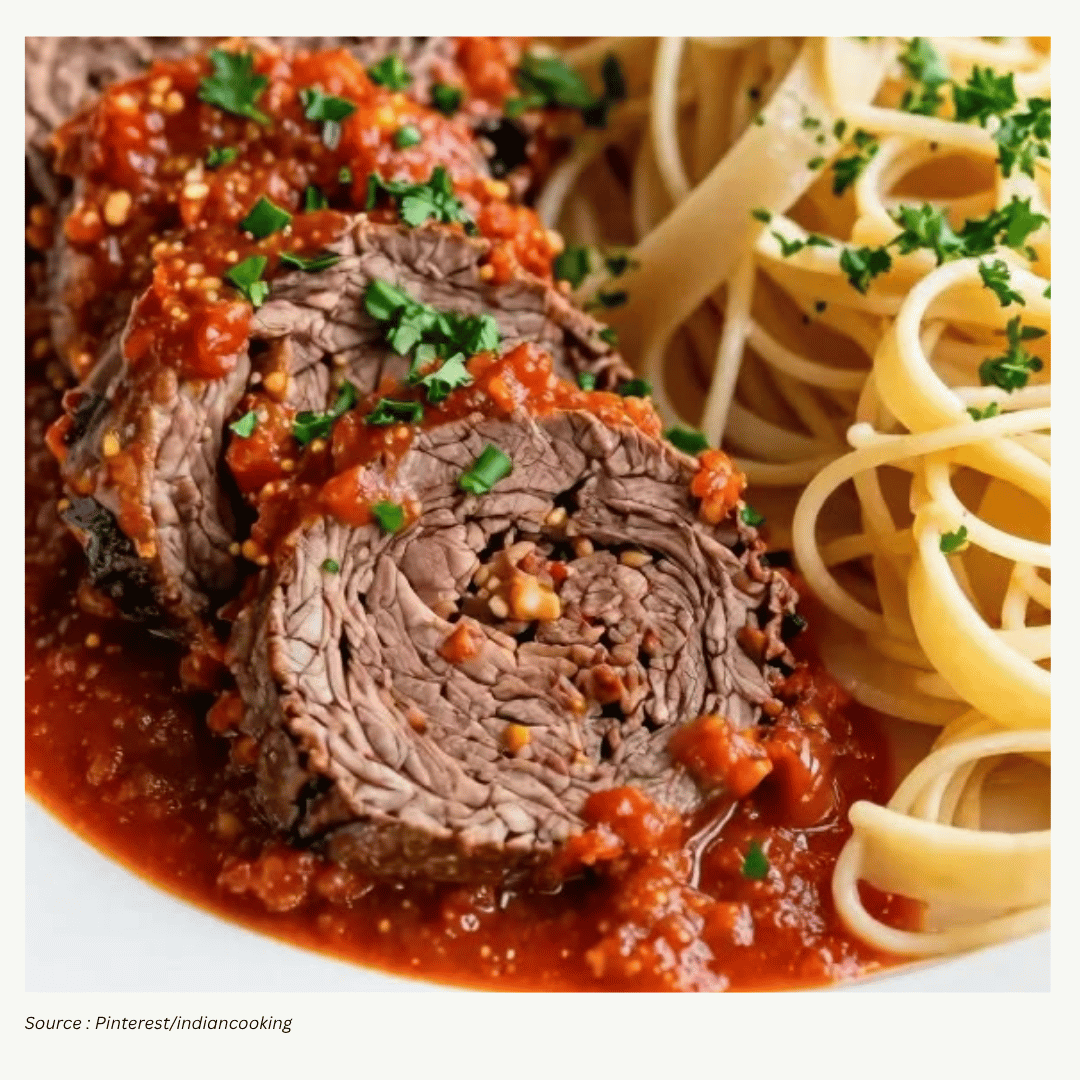
A classic Italian-style comfort dish built around a simple idea
Braciole is one of those dishes that sounds impressive the moment you describe it: meat rolled around a flavorful filling, browned, then simmered for hours in sauce until it becomes tender enough to slice and serve with a spoonful of tomato gravy. In its most familiar form, Italian beef braciole is made with thin beef that’s stuffed with a mixture of breadcrumbs, cheese and herbs, then slow-cooked in a tomato sauce. The method is straightforward, but the results feel like something reserved for family gatherings and holiday tables.
At its core, braciole is a roulade—thin slices of meat (commonly beef, but also chicken or pork) rolled around a filling. The rolled meat is seared for flavor, then cooked slowly in sauce. That long, gentle cooking is what turns a lean cut into something sliceable and tender, while the filling seasons the meat from the inside out.
What goes into beef braciole: filling, beef and sauce
This version centers on beef with a savory interior made from breadcrumbs, cheeses, parsley and black pepper, plus pancetta that’s cooked until crisp and then folded into the mixture. The braciole is then browned and finished in marinara sauce with red wine. The combination is intentionally classic: salty pancetta, aromatic garlic and onion, herbs, cheese, and tomato.
While there are many variations, beef braciole is often considered the most common. Cuts frequently used include beef rump, top round or bottom round. Flank steak also works well here, especially because it can be pounded thin and rolled tightly, creating neat slices once cooked.
One practical note about the sauce: this approach uses store-bought marinara. It’s a choice driven by convenience rather than strict tradition, and it can still produce a satisfying result. If you’ve ever debated whether homemade sauce is “required,” the argument here is simple: the biggest flavor contributions come from browning the beef and adding red wine, so using a marinara you already like can be a reasonable shortcut.
Step-by-step overview: how the dish comes together
The process can be broken into three main phases: building the filling, preparing and rolling the beef, and then browning and slow-cooking in sauce.
- Cook the pancetta and aromatics: Pancetta is cooked with oil until crispy. Then onion, red pepper flakes and garlic are added and cooked until the onions turn translucent.
- Mix the filling: Breadcrumbs, cheeses, parsley and pepper are combined, then stirred together with the warm pancetta-onion-garlic mixture.
- Pound the steak: Flank steak is pounded to about 1/4-inch thickness. This helps it roll evenly and cook into tender slices later.
- Roll and secure: The steak is rolled tightly from the short end, tied with butcher’s twine, and seasoned with salt and pepper.
- Brown the braciole: The rolled beef is browned in olive oil in a Dutch oven until it’s browned on all sides.
- Build the braising liquid: Wine is added and brought to a boil, then marinara is stirred in.
- Slow-cook in the oven: Covered, the braciole bakes at 350°F for 2 hours, with basting every 30 minutes. After cooking, the twine is removed, the meat is sliced diagonally, and served with sauce.
During the oven braise, the sauce may thicken. That reduction is part of what concentrates flavor, and the extended cooking also helps break down the meat. If you prefer a looser sauce at the end, serving with a little extra marinara on the side can help keep everything saucy and moist.
Oven-braised or slow cooker: two reliable ways to slow-cook
One of the most useful features of braciole is that it adapts to different cooking schedules. The oven method uses a Dutch oven and a covered bake at 350°F for two hours, with periodic basting. That approach keeps the cooking contained and steady, and it’s easy to slice and serve once the meat is tender.
If you’d rather let the dish cook while you focus on other tasks, a slow cooker works as well. The key is to keep the browning step: searing the stuffed beef rolls first adds depth that you won’t get by simply placing raw meat into sauce. After browning, the braciole can be transferred to a slow cooker, covered with sauce, and cooked on low for 6–8 hours. For a shorter timeline, cooking on high for 3–4 hours is another option.
Both methods aim for the same outcome: tender beef, a cohesive filling, and a sauce that tastes like it has been simmering for hours—because it has.
Choosing wine and marinara: keep it simple, but choose what you like
Because the sauce is so central to the final dish, the two main “choice points” are the marinara and the wine. The guidance is practical: use a quality dry red wine—something you’d actually drink. Common picks include Chianti or Pinot Noir. The wine is added after browning the beef and brought to a boil before the marinara goes in, helping build a richer base.
For marinara, a store-bought option can be used without sacrificing the spirit of the dish. If you have a favorite jarred marinara, it can streamline the process significantly. The key is selecting one you enjoy on its own, since it will be the backbone of the braise.
Cheese questions and easy swaps
The filling relies on cheese for both flavor and texture. If you’re not a fan of parmesan, the recipe can still work by swapping in another cheese. An equal amount of provolone is one suggested alternative. The main goal is to keep the filling savory and cohesive, so staying within similar quantities helps the roll hold together as it cooks.
Beyond cheese, braciole is naturally flexible. Many cooks like to “mix up” ingredients based on preference, and there are plenty of variations in the broader braciole tradition. Still, the core formula—breadcrumbs, cheese, herbs, and a cured pork element like pancetta—creates a filling that complements tomato sauce and slow-cooked beef.
Serving ideas: pasta is classic, but not the only option
Braciole is often served as a hearty main course with something to soak up the sauce. Pasta is the obvious partner, especially when you want to turn the meal into a full Italian-style plate: slices of braciole, a ladle of sauce, and noodles dressed with that same tomato base.
But pasta isn’t the only way to enjoy it. Any side that can catch and hold sauce works well, including crusty bread. If you’re looking for alternatives, here are side ideas that pair well with a rich tomato braise:
- Garlic mashed cauliflower
- Goat cheese polenta
- Crispy roasted potatoes
- Goat cheese risotto
- Cream cheese mashed potatoes
These sides share a common trait: they’re comforting, substantial, and designed to work with a saucy main. Braciole isn’t a light dish, and it doesn’t need a delicate accompaniment—something warm and sturdy is usually the best match.
Make-ahead and storage: plan it around your schedule
Braciole is well-suited to advance prep, which can be especially helpful if you’re cooking for guests or trying to spread the work over two days. You can assemble the rolls and refrigerate them for up to 24 hours before cooking. That means you can do the pounding, filling, rolling and tying ahead of time, then simply brown and braise when you’re ready.
It also stores well after cooking. Kept in an airtight container with sauce, braciole can be refrigerated for up to 4 days. For longer storage, it can be frozen for up to 3 months. Because the meat is stored with sauce, it tends to reheat more evenly and stay moist.
Reheating without drying it out
Since braciole is a rolled, lean cut of beef, reheating gently matters. The recommended approach is to warm it in a saucepan over low heat with extra marinara sauce to keep it moist. Another option is to cover and bake at 300°F until heated through. Both methods aim to reheat slowly and preserve the tender texture created during the long cook.
Microwaving is best avoided, as it can dry out the meat and make the slices tougher. If you’re reheating leftovers for a quick meal, a small pot on the stove with a splash of sauce is often the simplest way to keep the braciole tasting like it did on day one.
Practical notes from home cooks: timing, temperature and texture
Braciole is a dish that invites feedback because it’s so often made for family dinners. Some cooks find the oven temperature of 350°F leads to a lively simmer, especially in a tightly covered pot, and that the sauce can become thicker once the lid is removed. Others appreciate that reduction because it intensifies flavor and helps tenderize the meat over time. The common thread is that the long braise is doing two jobs at once: concentrating the sauce and breaking down the beef.
If you’re new to braciole, it can help to think of the cooking as a slow transformation rather than a quick finish. Browning adds immediate flavor, but the tenderness comes later. That’s why basting every 30 minutes is built into the oven method, and why the slow cooker version emphasizes a long cook on low.
Why this dish earns a place in your comfort-food rotation
Italian beef braciole hits a specific kind of craving: it’s meaty, saucy, and built for sharing. The filling adds interest to every slice, and the tomato-and-wine sauce makes it easy to serve with pasta, potatoes, polenta or bread. It’s also a dish that can feel special without requiring complicated techniques—just a few key steps done in order: pound, fill, roll, tie, brown, then cook slowly until tender.
Whether you choose the oven approach or the slow cooker, braciole is ultimately about patience and payoff. Assemble it carefully, sear it well, and give it the time it needs in sauce. When you slice it diagonally and spoon sauce over the top, you’ll have a hearty meal that’s as satisfying on a holiday table as it is on an ordinary weeknight—especially with leftovers waiting in the fridge for the next day.