
Stuffed Cabbage Rolls (Golabki): A Comforting Polish Classic with Beef, Rice and Tomato Sauce
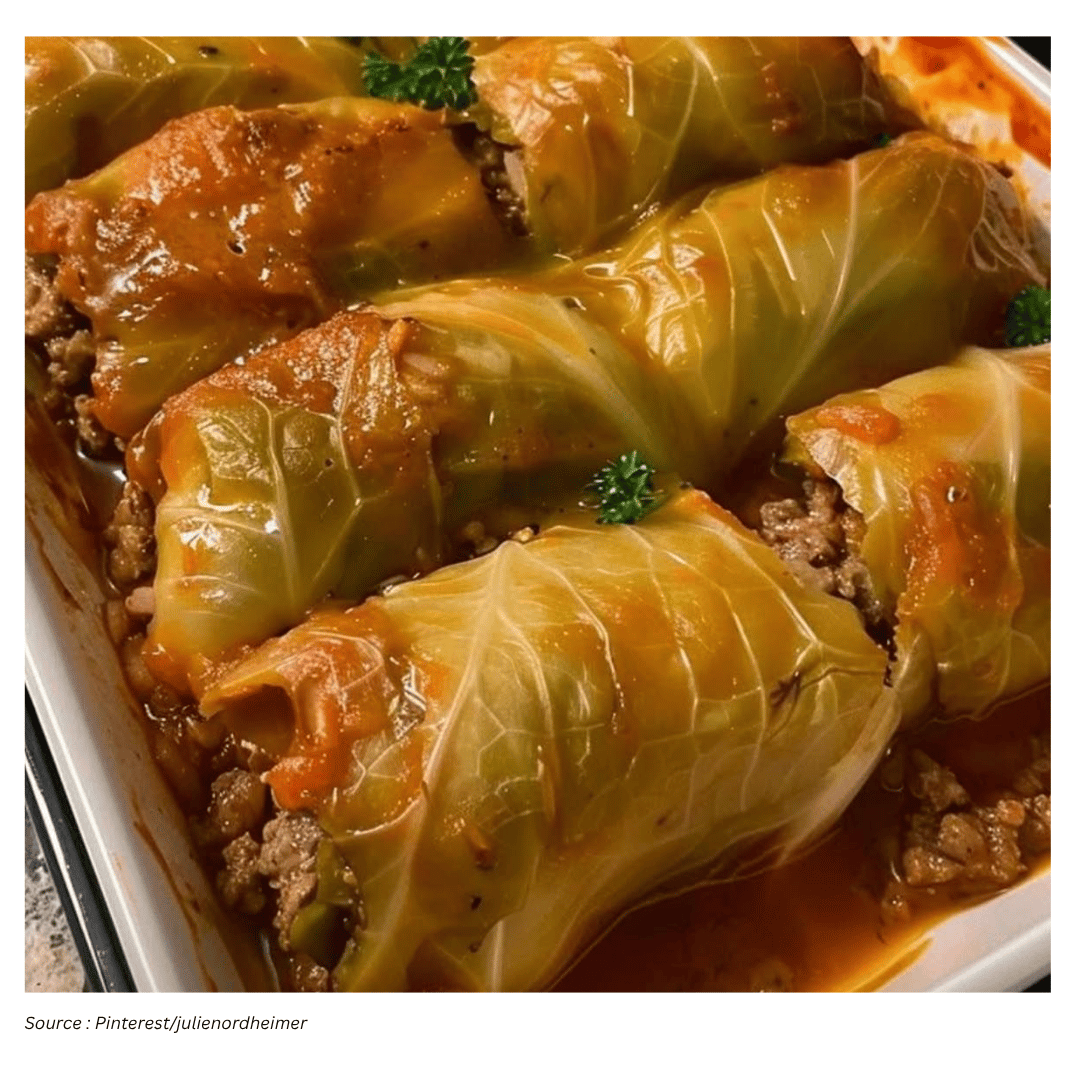
A warm, familiar dish: what golabki are
Stuffed cabbage rolls—often called golabki—are a traditional Polish dish built around a simple, comforting formula: cabbage leaves are softened, filled, rolled, and baked, then topped with tomato sauce. The filling is commonly made with beef and rice, creating a hearty, satisfying meal that feels especially fitting on cold nights when you want something cozy and nourishing.
Part of the appeal of many Eastern European dishes is how straightforward they can be. The ingredient lists are often approachable, but the end result is still packed with flavor. Golabki fit that description well: they are not complicated in concept, yet they deliver the kind of homestyle comfort that people remember for years.
Why these cabbage rolls are so memorable
For many families, stuffed cabbage rolls are tied to specific memories—restaurants that served them, special dinners, or meals shared across generations. In one home-cooking scenario, a request for cabbage rolls came up while planning a meal alongside homemade pierogies, sparked by nostalgia for a beloved restaurant that once served standout Polish cabbage rolls. When a favorite place closes, a dish like this can become even more meaningful: recreating it at home becomes a way to bring back a taste of the past.
That sense of memory is also why people tend to be particular about their preferred version. Some like a classic beef-and-rice filling. Others enjoy a blend of meats for added flavor. One approach that can bring extra depth is using a mix of ground beef and ground pork rather than beef alone. It is still very much in the spirit of traditional Polish cabbage rolls, which are commonly described as using a combination of beef and pork, baked and served with a sweet-and-sour tomato sauce.
Origins and tradition: a dish with overlapping influences
Ask where stuffed cabbage rolls began and you may hear more than one answer. One belief is that an early version developed as part of Jewish food tradition, featuring beef, rice, and raisins. Over time and across regions, versions evolved and became closely associated with different cuisines.
The golabki described here are presented as traditionally Polish: cabbage leaves filled with a mixture that can include beef and pork, baked, and finished with tomato sauce that leans sweet-and-sour. While there are many variations, this combination is a common reference point for what people mean when they talk about Polish cabbage rolls.
The core components: cabbage, filling, and tomato sauce
At its heart, golabki are defined by three elements:
- Cabbage leaves that are tender enough to roll without tearing too much.
- A filling commonly built from ground meat (often beef, sometimes beef and pork) and rice.
- Tomato sauce spooned over the rolls after baking, bringing moisture, brightness, and a classic sweet-and-sour character in the Polish tradition described.
Because the structure is so clear, the dish is approachable even if you have never made cabbage rolls before. The main challenge is not the filling or the sauce—it is preparing the cabbage leaves so they separate cleanly and wrap easily.
The most practical technique: how to remove cabbage leaves without frustration
Trying to remove raw cabbage leaves from a whole head can be surprisingly difficult. Even with care, tearing is common. The most reliable method is to soften the cabbage first so the leaves become flexible and release more easily.
A widely recommended approach is:
- Cut off the root end of the cabbage head.
- Submerge the entire cabbage head in a pot of boiling water for about 5 minutes.
- Once the leaves are tender, pull them away from the head more easily.
This step is not just about convenience. Softened leaves roll better, sit neatly in the baking dish, and are less likely to split when you fold and tuck them around the filling.
Assembling the rolls: a simple, repeatable process
Once the cabbage leaves are tender and separated, the rest of the process becomes methodical. You prepare a filling of ground meat and rice, portion it onto each leaf, then roll the leaf up to enclose the filling. The rolls are then baked and served with tomato sauce on top.
Even though the dish is associated with tradition, the assembly is essentially a set of basic kitchen actions repeated several times. Many people find that after rolling the first few, the technique becomes second nature.
Make-ahead flexibility: prep today, bake tomorrow
One reason stuffed cabbage rolls are popular for family meals is that they can fit different schedules. If you want to spread the work out, you can assemble the cabbage rolls up to a day ahead of time. Arrange them as you plan to bake them, cover, and refrigerate. When you are ready, bake them as planned.
This make-ahead option can be especially helpful if you are preparing a larger meal—such as serving cabbage rolls alongside other comfort-food favorites—or if you simply want to do the hands-on rolling step when you have more time.
Troubleshooting: when the cabbage feels too firm
A common issue with cabbage rolls is discovering after baking that the cabbage is still too firm. When that happens, it typically means the cabbage was not boiled long enough at the start. The fix is straightforward: bake the rolls covered in additional time increments of about 10 minutes until the cabbage has softened.
Keeping the dish covered while you extend the bake helps retain moisture and heat, encouraging the cabbage leaves to become tender without drying out the filling.
Serving ideas: leaning into comfort
Stuffed cabbage rolls are a comfort food, so it often makes sense to choose sides that match that cozy theme. When thinking about what to serve with golabki, many cooks prefer to “steer into” comfort rather than contrast it with something overly light or delicate.
While side dish choices can vary widely by household, the guiding idea is simple: pick something that feels hearty and at home next to baked cabbage rolls with tomato sauce. The dish itself is filling, so sides can be kept uncomplicated and familiar.
Why a beef-and-pork blend can work well
Although beef-and-rice is a classic filling, using a mix of ground beef and ground pork is a variation that can add flavor while staying aligned with the traditional Polish approach described for golabki. In the context of recreating a memorable restaurant-style cabbage roll at home, this blend can be a satisfying way to deepen the taste without changing the essence of the dish.
The overall structure remains the same—cabbage leaves, a meat-and-rice filling, baking, and tomato sauce—but the filling can feel a bit richer and more rounded when two meats are used together.
A dish that rewards patience more than precision
Golabki are not about fussy presentation or complicated culinary techniques. They are about taking a humble head of cabbage and turning it into something comforting and substantial. The most important “skill” is simply giving yourself a little time—time to soften the cabbage, time to roll steadily, and time to bake until the leaves are tender.
If your first attempt includes a few torn leaves or imperfect rolls, it does not mean you did it wrong. Tearing can happen even when you are careful, especially if the cabbage has not softened enough. With the boiling-water method and a bit of repetition, the process becomes much easier.
Key takeaways for home cooks
- Golabki are traditional Polish stuffed cabbage rolls made with baked cabbage leaves filled with beef and rice and topped with tomato sauce.
- Some versions use a beef-and-pork blend, which can add flavor while staying consistent with common Polish descriptions of the dish.
- Softening the cabbage is the crucial step: cut off the root end and boil the whole head for about 5 minutes so leaves pull away more easily.
- You can assemble the rolls a day ahead and refrigerate them covered until you are ready to bake.
- If the cabbage is still firm after baking, bake covered in additional 10-minute increments until tender.
Comfort food that connects generations
Stuffed cabbage rolls have a way of carrying stories—about family dinners, about the meals people grew up with, and about restaurants that once served a version no one forgot. Recreating golabki at home is not only about putting dinner on the table; it can be a way to revisit those memories or create new ones for the first time.
With tender cabbage leaves, a savory meat-and-rice filling, and tomato sauce spooned over the top, this Polish classic remains a simple but deeply satisfying meal—one that feels right when you want something warm, familiar, and made to be shared.